
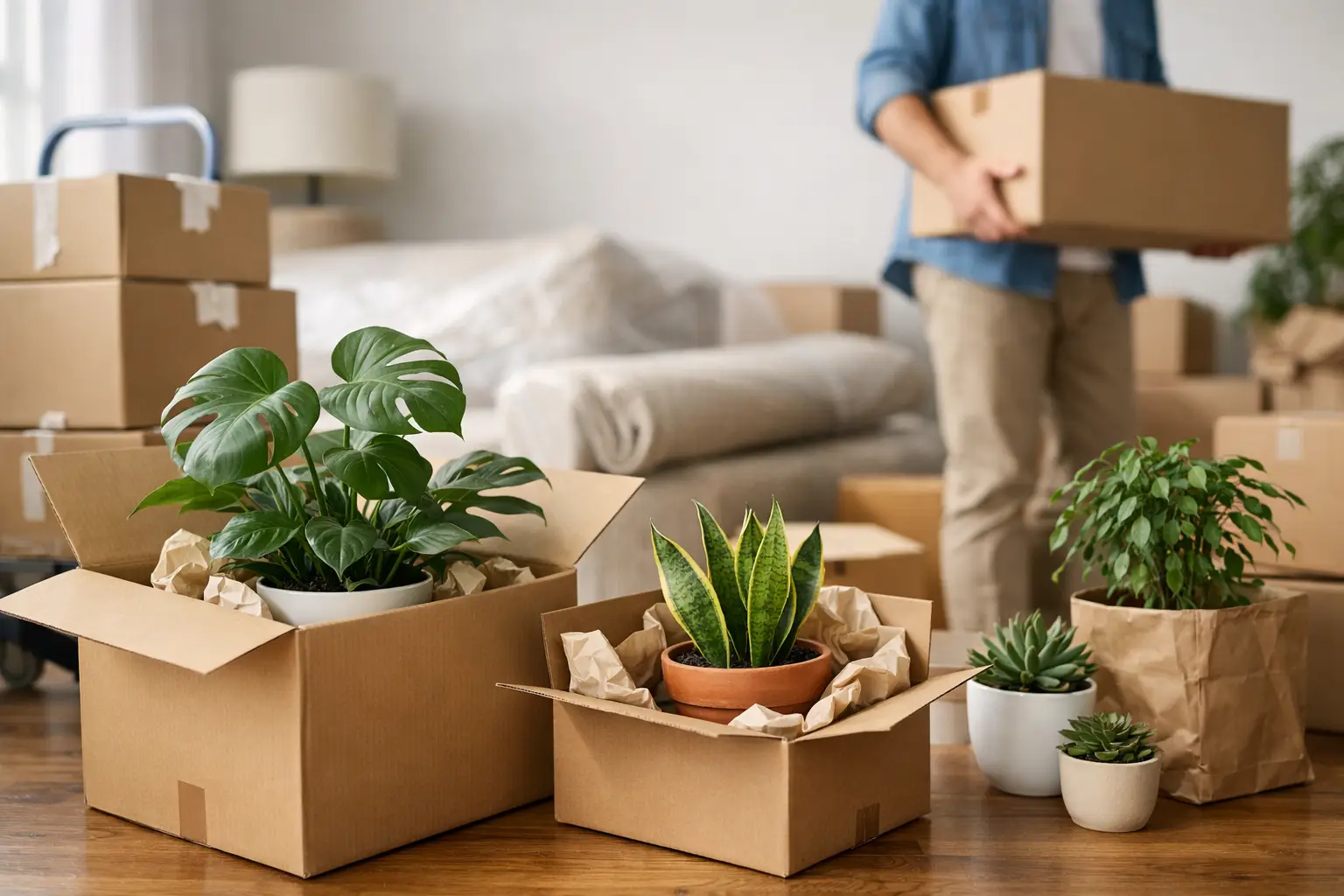
A house move can be hard on plants. One day they are settled by a bright window, the next they are dealing with less light, changing temperatures, bumpy roads and unfamiliar rooms. Knowing how to move plants safely helps protect the plants you have spent time growing and prevents loose soil, snapped stems and leaking pots from complicating moving day.
The key is to treat plants differently from furniture and boxed belongings. They need airflow, a stable position and a short journey where possible. With a little preparation, most healthy houseplants can make the move well.
Plan for your plants before packing day
Start by deciding which plants are genuinely worth taking. Moving is a good opportunity to leave behind struggling, diseased or heavily infested plants. Check leaves, stems and soil for pests before they go near your other belongings or into the new property.
Think realistically about the new home, too. A large sun-loving plant may not suit a shaded flat, while several small pots can be difficult to manage if you are moving from London to another part of the UK. If a plant is unlikely to thrive after the move, gifting it to a neighbour or friend may be kinder than transporting it unnecessarily.
For the plants you are taking, avoid repotting in the week before the move. Freshly disturbed roots need time to settle, and new compost is more likely to spill. If a pot is cracked or far too heavy, repot into a secure plastic nursery pot two or three weeks ahead, not the night before.
Water at the right time
Overwatering is one of the most common mistakes when moving plants. A soaked pot becomes much heavier, soil can turn into mud, and water may leak into the van or onto other items. Water most indoor plants lightly two to three days before the move, allowing excess moisture to drain away.
The exact timing depends on the plant and the season. Succulents, cacti and plants that prefer dry soil should be kept on the dry side. Ferns and moisture-loving tropical plants may need a little more water, especially in warm weather. The aim is slightly moist soil, not a dripping pot.
If you are moving in winter, do not water heavily just before loading. Cold, wet roots are more vulnerable, particularly if plants are left outside while boxes are carried down stairs or loaded from a property.
Prune and secure loose growth
Remove dead leaves, spent flowers and damaged stems a few days before moving. This makes the plant easier to handle and gives you a clearer view of any pest problems. Do not prune aggressively unless the plant needs it, as major cutting can create additional stress.
For tall plants, loosely tie long stems or branches together with soft twine, fabric strips or plant ties. Never pull them tightly against the main stem. The purpose is to stop movement in transit, not to force the plant into a new shape.
How to pack plants for a move
Small and medium plants are easiest to transport in open-top cardboard boxes. Line the base with a folded towel, packing paper or a bin bag covered by absorbent material. Place pots upright and close together so they cannot slide, then fill gaps with scrunched paper or towels.
Keep the tops open whenever possible. Plants need ventilation, and closed boxes can quickly become too warm or too cold. For a short journey, a loose paper sleeve around the foliage can protect delicate leaves without crushing them.
Use this approach for different plant types:
- Small pots: Group several pots in one sturdy box, but do not stack them.
- Large floor plants: Wrap the pot, not the leaves, in a blanket or protective material. Secure the pot upright in the vehicle.
- Tall leafy plants: Gently gather foliage upwards and use a loose sleeve made from paper or breathable fabric.
- Cacti and spiky plants: Wear gloves and wrap the plant carefully with several layers of paper, leaving room around the spines.
- Hanging plants: Remove hooks and supports. Put the pot in a box and secure trailing stems loosely on top of the soil.
Avoid wrapping plants in plastic for long periods. Plastic can trap condensation and restrict airflow. It may be useful as a waterproof layer around the pot itself, but it should not be tightly wrapped around living foliage.
Transport plants separately where possible
Plants should normally be loaded last and unloaded first. That reduces the time they spend in a dark vehicle and prevents heavy boxes being placed near them. They should travel upright on a flat, stable surface, never balanced on seats or wedged beneath furniture.
For local moves, many customers choose to carry their plants in their own car. This gives you control over the temperature and lets you take them straight into the new property. It is especially sensible for valuable, fragile or sentimental plants.
If plants are travelling in a removals van, tell the moving team in advance. A professional team can allow space for them, keep them upright and avoid placing heavy items nearby. However, plants are living items and may not be covered in the same way as furniture under goods-in-transit insurance. Confirm the arrangements and cover before moving day, particularly for expensive or unusual specimens.
Do not leave plants in a parked vehicle for longer than necessary. In summer, even a mild London day can make the inside of a van too hot. In cold weather, chilled air and frost can damage tropical houseplants quickly. If there is a delay, move plants indoors or into a sheltered area.
Protect plants from cold, heat and wind
Temperature changes cause more damage than a few bumps. In autumn and winter, bring plants inside until the vehicle is ready for loading. If the journey involves waiting outside, cover foliage loosely with horticultural fleece, paper or a blanket. Remove the covering as soon as the plants are indoors again.
During warmer months, keep plants out of direct sun while loading and unloading. Water bottles, mirrors and glass near a sunny window can magnify heat, so avoid leaving pots in those spots. Good ventilation matters, but direct draughts from an open window can dry out delicate leaves.
Outdoor plants need similar care. For container plants, tie back branches, remove decorative canes that may catch, and make sure each pot is stable. Very large planters may need two people, a trolley or specialist handling. Lifting by the trunk or branches can damage roots and stems – always lift from underneath the pot or planter.
Settle plants quickly at the new address
Once you arrive, unpack plants before artwork, kitchen items or non-essential boxes. Put them in a bright room away from radiators, open doors and cold windows. It is tempting to place every plant exactly where it will live, but give them a few days to recover before making major changes to their light levels.
Check the soil and water only if it feels dry below the surface. A plant may droop after a move even when it has enough water, simply because the temperature and light have changed. Adding more water too soon can make the problem worse.
Expect some adjustment. A few yellow leaves, minor leaf drop or slower growth can happen after transport, particularly with fiddle-leaf figs, calatheas and other sensitive houseplants. Keep conditions steady, avoid fertiliser for several weeks and watch for signs that the plant is improving.
If you have moved in the colder months, keep plants away from windows overnight until you understand how cold the new rooms become. If the property is still being cleaned, decorated or repaired, protect plants from paint fumes, dust and sudden heating changes.
When professional help makes sense
A few small houseplants are manageable in a car, but a collection of large pots can become a genuine moving-day challenge. Heavy ceramic planters, mature indoor trees and balcony containers need careful lifting, proper space in the vehicle and a clear route through the property.
For these moves, share photos and approximate pot sizes when requesting a quote. That allows the removals team to plan the right number of movers, suitable protective materials and safe loading order. The Kings Removals can help with the wider move while ensuring plant containers are handled thoughtfully alongside your furniture and boxes.
Your plants may not look perfect on the first evening in a new home, and that is normal. Give them stable conditions, a little patience and the same care you used to grow them in the first place – they will usually settle in well.