
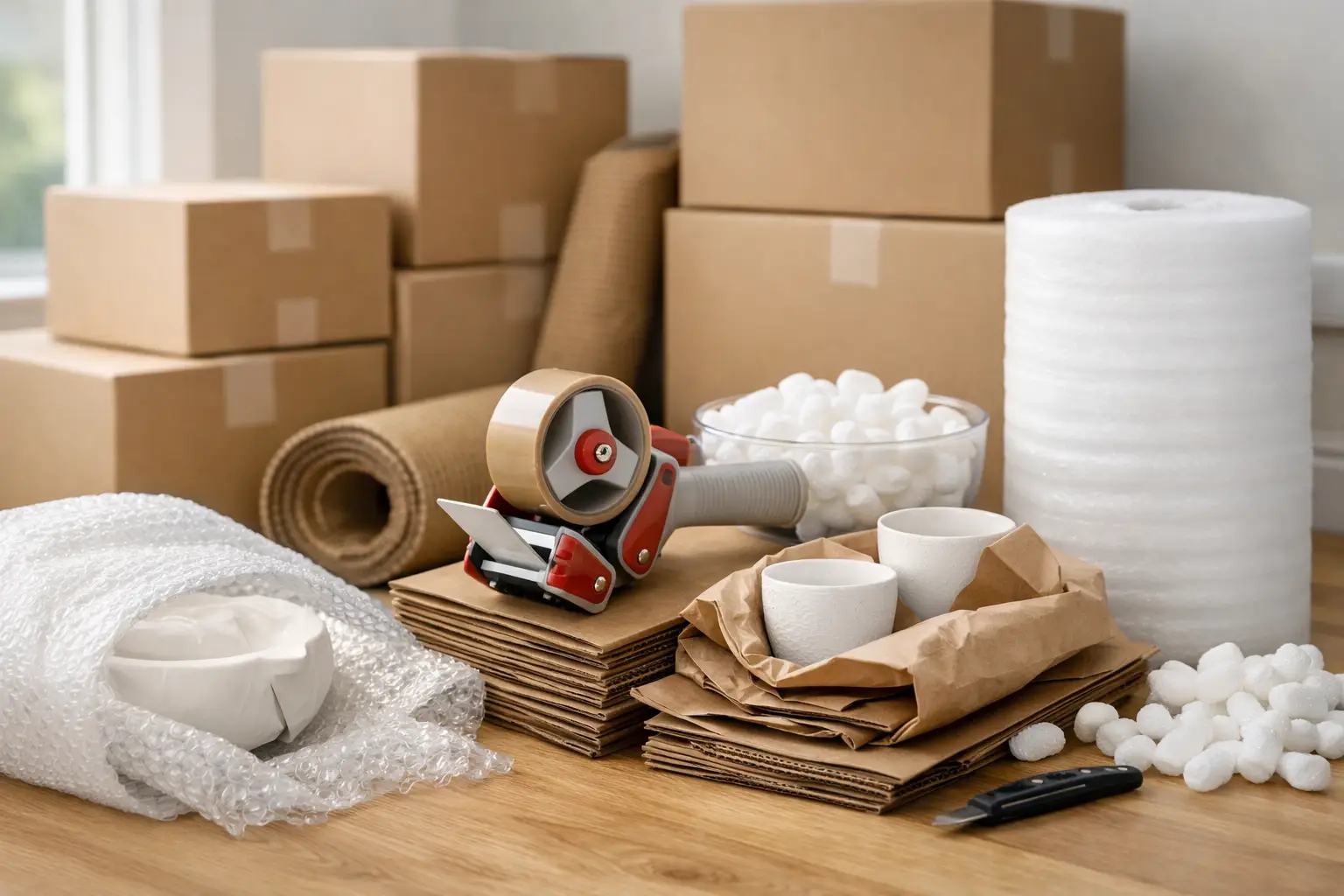
A box splitting on the pavement or a mug rattling loose in transit is usually not bad luck. It is usually the result of using the wrong materials. If you are trying to choose the best packing materials for moving, the goal is simple – protect your belongings properly without wasting money, space or time.
A good move is not just about what goes in the van. It starts much earlier, with packing materials that match the weight, shape and fragility of each item. Some materials are worth paying for, some are easy to overbuy, and some only help if they are used in the right places.
What the best packing materials for moving actually do
The best packing materials for moving do three jobs at once. They protect items from impact, stop movement inside the box and make handling safer for whoever is lifting and loading.
That matters more than many people expect. A move in London often means stairs, narrow hallways, quick loading windows and tight parking. Boxes are stacked, moved more than once and sometimes carried further than planned. If the material is too weak, too thin or the wrong size, the risk of damage goes up quickly.
This is why packing is not really about filling boxes. It is about controlling movement and pressure. A heavy box with poor tape is a problem. A fragile item in an oversized box is also a problem. The right material reduces both.
Strong cardboard boxes come first
If you buy only one thing properly, make it the boxes. Double-walled cardboard boxes are usually the best option for most home moves because they hold shape better and cope with stacking far more reliably than flimsy single-walled ones.
Small boxes are best for books, tools, kitchenware and anything dense. Large boxes are better for lighter items such as bedding, cushions and clothes. This is where people often get caught out. They fill a large box with books because there is space, then it becomes too heavy to lift safely and more likely to burst at the base.
Wardrobe boxes can be worth it if you need speed and want to keep hanging clothes crease-free. They cost more, so they are not essential for every move, but they can save time on moving day. If you are packing for storage as well as transport, sturdier boxes make even more sense because the items may sit stacked for longer.
Used boxes can help cut costs, but only if they are genuinely strong, dry and clean. If a box has soft corners, water marks or previous damage, it is not doing you any favours.
Bubble wrap is useful, but not for everything
Bubble wrap is one of the most useful protective materials, especially for glassware, framed pictures, ceramics and electronics. It cushions surfaces well and helps absorb shocks during loading and unloading.
That said, it is often overused. Wrapping every single item in several thick layers adds volume fast and can increase your packing costs. For many household items, a combination of packing paper and sensible box filling works just as well.
For delicate items, wrap each piece separately and make sure there is padding between items, not just around them. Plates are usually safer packed vertically like records rather than stacked flat. Glasses and mugs need internal support from crumpled paper as well as outer wrapping.
If you are packing mirrors or artwork, bubble wrap helps, but rigid corner protectors and flat picture boxes offer better overall protection. Fragile flat items crack more often from pressure than from direct knocks.
Packing paper is one of the most cost-effective choices
Plain packing paper is underrated because it does not look like specialist kit, but it is one of the best materials you can have. It is clean, flexible and ideal for wrapping crockery, filling gaps and layering fragile items.
It also avoids one common issue with newspaper – ink transfer. Newspaper might seem like a budget option, but it can mark plates, lampshades, fabric and light-coloured surfaces. If you are packing kitchen items or decor, clean paper is the safer choice.
Packing paper works best when used to stop movement, not just to wrap. Empty space inside a box is what leads to shifting, impacts and cracked items. Filling those gaps properly often matters more than adding another layer around the object itself.
Tape matters more than people think
Cheap tape is a false economy. If it peels off overnight or gives way when the box is lifted, the whole packing job is compromised. Strong parcel tape with good adhesion is essential, especially for heavier boxes.
Use more tape on the bottom of boxes than you think you need. A proper seal across the centre and edges gives much better support. Heavy boxes may need reinforcement in an H-pattern on both top and bottom.
A tape gun is also worth having if you are packing a full home. It speeds things up, gives cleaner seals and reduces frustration. Small detail, big difference.
Furniture blankets and stretch wrap protect larger items
Boxes and wrap get most of the attention, but larger household items need proper surface protection too. Furniture blankets are excellent for wooden tables, chest drawers, bed frames and appliances because they guard against scuffs, dents and rubbing during transport.
Stretch wrap is useful for keeping drawers closed, securing padding in place and bundling loose parts together. It is practical, but it should not be applied directly to delicate polished surfaces for long periods, especially if the item is heading into storage. In those cases, use a protective layer underneath.
Mattress covers are another sensible addition. A mattress can survive a move structurally, then be ruined by dirt or moisture. A fitted protective cover is a low-cost way to avoid that problem.
Specialist materials are worth it for certain items
Some belongings need more than standard boxes and paper. TV boxes with foam inserts, dish barrels, mirror cartons and bottle dividers all exist for a reason. They reduce movement and spread pressure in ways a general box cannot.
This does not mean every move needs specialist packaging for everything. If you are moving a few standard household goods locally, basic quality materials may be enough. But if you are transporting expensive electronics, artwork, antiques or business equipment, specialist packing is often the cheaper option compared with replacing damaged items.
This is also the point where professional help starts to make financial sense. A packing team does not just bring materials – they know where to use them and where not to waste them. For busy households and offices, that can save a lot of time and prevent expensive mistakes.
Choosing materials by room makes packing easier
The kitchen usually needs the strongest mix of materials because it contains dense and fragile items together. Small double-walled boxes, packing paper, bubble wrap and good tape are the key combination here.
Bedrooms are usually simpler. Medium boxes, wardrobe boxes and mattress covers do most of the work. Vacuum bags can save space for bedding and seasonal clothes, but do not use them for items that crease easily or need airflow in storage.
For the lounge, think about surface protection as much as boxing. TVs, lamps, framed prints and side tables need wrap, blankets and corner protection. Bookshelves and cabinets may need dismantling, with fittings packed in labelled bags taped securely to the relevant item or stored in one clearly marked box.
Home offices need a more careful approach than many people expect. Documents, monitors, printers and cables can become chaotic quickly. Smaller boxes, cable ties, anti-static wrapping where appropriate and clear labelling save a lot of time when you unpack.
Do not ignore labels and weight distribution
The best materials can still fail if the boxes are packed badly. Overloading, poor balance and vague labelling create avoidable problems on moving day.
Keep heavy items at the bottom and lighter items on top. Fill space so nothing shifts, but do not force box flaps closed over an overpacked load. Label at least two sides of each box and be specific. “Kitchen” is helpful. “Kitchen – plates and mugs” is much better.
If a box contains breakables, mark it clearly, but also pack it as if nobody saw the label. Fragile stickers do not replace proper protection.
When cheaper materials cost more
There is always a balance between budget and protection. Not every move requires premium packaging from start to finish. But the cheapest option is often only cheaper at the checkout.
Weak bin bags tear. Discount boxes collapse. Low-grade tape fails. Replacing damaged household items, losing time repacking or dealing with scratched furniture usually costs more than buying decent materials from the start.
For many moves, the smartest approach is selective spending. Invest in strong boxes, proper tape and protection for fragile or high-value items. Be more economical with low-risk belongings like towels, duvets and everyday clothing.
If you want the move to run faster, safer and with less hassle, good materials are not an extra. They are part of the job. And if you would rather not work out every box, wrap and blanket yourself, a practical removals team like The Kings Removals can take that pressure off and help protect everything properly from door to door.
A smoother move usually comes down to simple decisions made early – and packing with the right materials is one of the most useful ones you can make.