
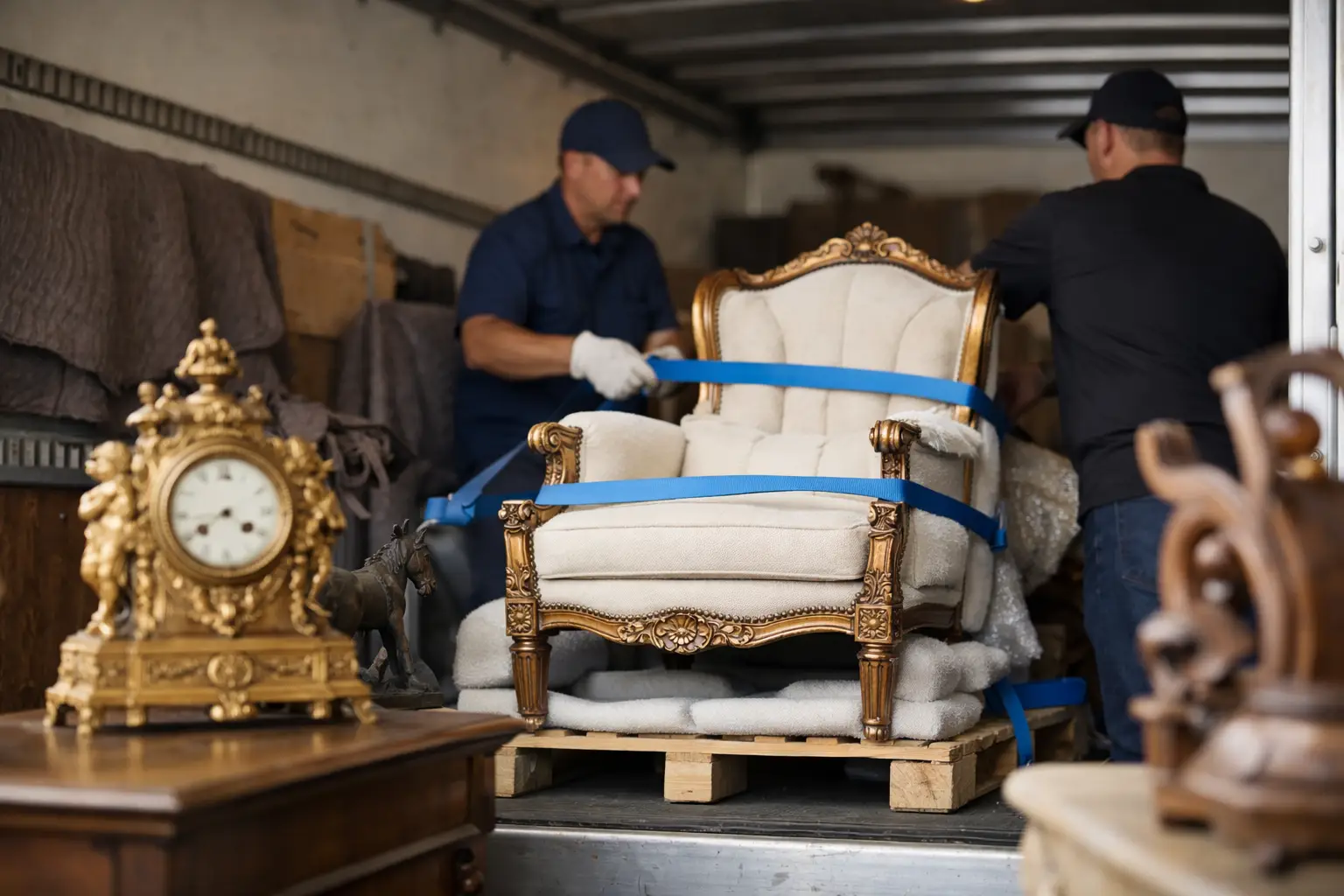
A Georgian chest with loose veneer, a gilt mirror with an original frame, or a family clock that has crossed generations cannot be treated like ordinary furniture. The right secure transport for antiques starts before anything is lifted: with an honest assessment of the item, a clear packing plan and enough trained hands to move it safely.
For homeowners, collectors, antique dealers and small businesses in London, the concern is rarely just getting an item from A to B. It is avoiding chipped edges, scratched surfaces, moisture damage, pressure on weak joints and the uncertainty of a rushed move. A professional removals team should make the process feel controlled from collection to placement.
Why antiques need a different moving plan
Antiques are often more vulnerable than they look. Solid wood furniture may be heavy, but age can weaken joints, handles and carved details. A painting can be damaged by vibration or unsuitable wrapping. Glass-fronted cabinets, marble tops and ornate mirrors need protection that prevents both impact and movement inside the vehicle.
Value is another factor, but it is not the only one. An item may have modest resale value and still be irreplaceable because it belonged to a relative or has been part of a home for decades. That is why a sensible removals plan considers condition, construction, size and sentimental importance, not simply how expensive an item appears.
The method also depends on the journey. Moving one antique cabinet across London is different from clearing a period property, placing items into self-storage, or sending them nationwide. Stairs, narrow hallways, parking restrictions, lift access and the distance from the vehicle all affect the team, time and equipment required.
Secure transport for antiques begins with preparation
Good preparation removes many of the risks that lead to damage. Before moving day, identify every antique that needs special handling and point out existing marks, loose sections or fragile areas. Taking photographs is sensible for your own records, particularly for items with fine detail, delicate finishes or a known condition issue.
A removals provider should then consider whether an item can safely be dismantled. In some cases, removing detachable legs, shelves, mirror panels or handles makes transport safer. In others, dismantling can cause more harm than good, especially where old fixings, glue or veneer are involved. It depends on the construction, and the decision should be based on care rather than speed.
Packing should match the item. Clean protective blankets are useful for wooden furniture, but they may need to be combined with corner protection and secure wrapping to stop fabric rubbing against polished surfaces. Fragile glass, ceramics and small decorative pieces should be individually wrapped and packed tightly enough that they cannot shift. Paintings and mirrors need a rigid, cushioned approach that protects the face, frame and corners.
Avoid using tape directly on antique wood, lacquer, veneer or gilding. Adhesive can lift a finish or leave marks that are difficult to remove. Also avoid tightly wrapping an item with plastic for long periods, particularly if it is going into storage. Antique materials need protection from dust and knocks, but trapped moisture can create its own problems.
The vehicle matters as much as the wrapping
A suitable Luton van with a tail lift can make loading safer for heavy or awkward items. Rather than carrying a large cabinet down from a high loading area, the tail lift provides a more stable platform and reduces unnecessary strain on both the item and the team.
Inside the van, antiques should be positioned to prevent movement during braking and cornering. They should not be packed beneath heavy boxes or beside items that could shift against them. Load restraint, protective blankets and careful spacing all matter. A van that is simply full is not necessarily safely loaded.
Handling difficult pieces safely
Some antiques require more planning because the risk is obvious. Grandfather clocks, marble-topped tables, large mirrors, display cabinets and piano stools with delicate mechanisms should never be treated as quick man-and-van jobs without a proper handling plan.
For a tall clock, for example, the pendulum and weights may need securing or removal according to the manufacturer or specialist advice. A marble top may need to travel separately from its base. A large mirror may need a team of two or more people, depending on its size, access route and weight. Trying to save time with insufficient labour is one of the most common causes of accidents on stairs and tight turns.
Access should be checked before the move starts. Measure narrow doorways, landings and lift openings where necessary. If an item cannot turn safely through a hallway, the solution may be different parking, additional movers, temporary removal of a door, or a specialist plan. Finding this out on moving day can lead to delays and avoidable handling.
Insurance and condition: ask clear questions
Goods-in-transit insurance provides valuable reassurance during a move, but it should not be viewed as a substitute for careful packing and handling. Ask what cover applies to your booking, whether there are limits for individual items and whether you need to declare antiques of a particular value in advance. The right answer varies by provider and by the item being moved.
It is also worth being clear about who is packing the antique. If you pack a fragile item yourself, its protection may not be equivalent to professional packing, and this can affect how any issue is assessed. There is no need for complicated jargon, but a reliable removals company should explain the practical steps, the cover available and any information they need before the job is confirmed.
For especially valuable pieces, you may wish to speak with your household insurer or a specialist insurer before transport. This is particularly sensible for collections, artwork, rare instruments and items with a recent valuation. Keep copies of valuations, photographs and any restoration records in a separate place, not inside the moving box.
Choosing the right removals service
Price matters, especially when you are coordinating a full house move or office relocation, but the cheapest quote is not always the best value for antiques. A low hourly rate can become costly if the team arrives without enough people, suitable vehicle space or appropriate protective materials.
When requesting a quote, explain the number of antiques, their approximate dimensions, floor level, access conditions and destination. Mention whether items are going into a flat, house, shop, storage unit or office. Clear information allows the removals team to send the right crew – one, two or three professionals – and allocate enough time for secure handling.
Look for practical signs of a well-run service: responsive communication, questions about access, a clear explanation of vehicle and team size, careful loading, and a willingness to adapt if the scope changes. You should not have to guess whether your items will be protected or how the crew will manage a difficult staircase.
The Kings Removals can support antique moves as part of a residential removal, a single-item collection or a storage transfer, using trained movers, protective materials and Luton vans with tail lifts where appropriate. The aim is straightforward: reduce handling risks while keeping your move organised and moving on schedule.
On the day of the move
Keep antiques separate from everyday boxes and label any packed fragile items clearly. If there are pieces that must remain upright, cannot be stacked or need to be unloaded first, tell the movers before loading begins. A quick walk-through at collection and delivery helps everyone work from the same plan.
At the destination, decide in advance where the item will go. Moving an antique chest once is safer than moving it into a room, then asking for it to be repositioned twice because the layout has not been settled. Make sure floors are clear, doorways are open and there is enough room to place the item without forcing it against walls or furniture.
After delivery, inspect the item in good light before unpacking the rest of the room. Check corners, glass panels, legs, handles and surfaces against the photographs you took earlier. If an antique has been wrapped for transport, remove the protection carefully and allow it to adjust gradually to the room, especially after a cold or damp journey.
The safest move is rarely the fastest-looking one. It is the one where the right people, packing and vehicle are arranged before an antique reaches the front door.