
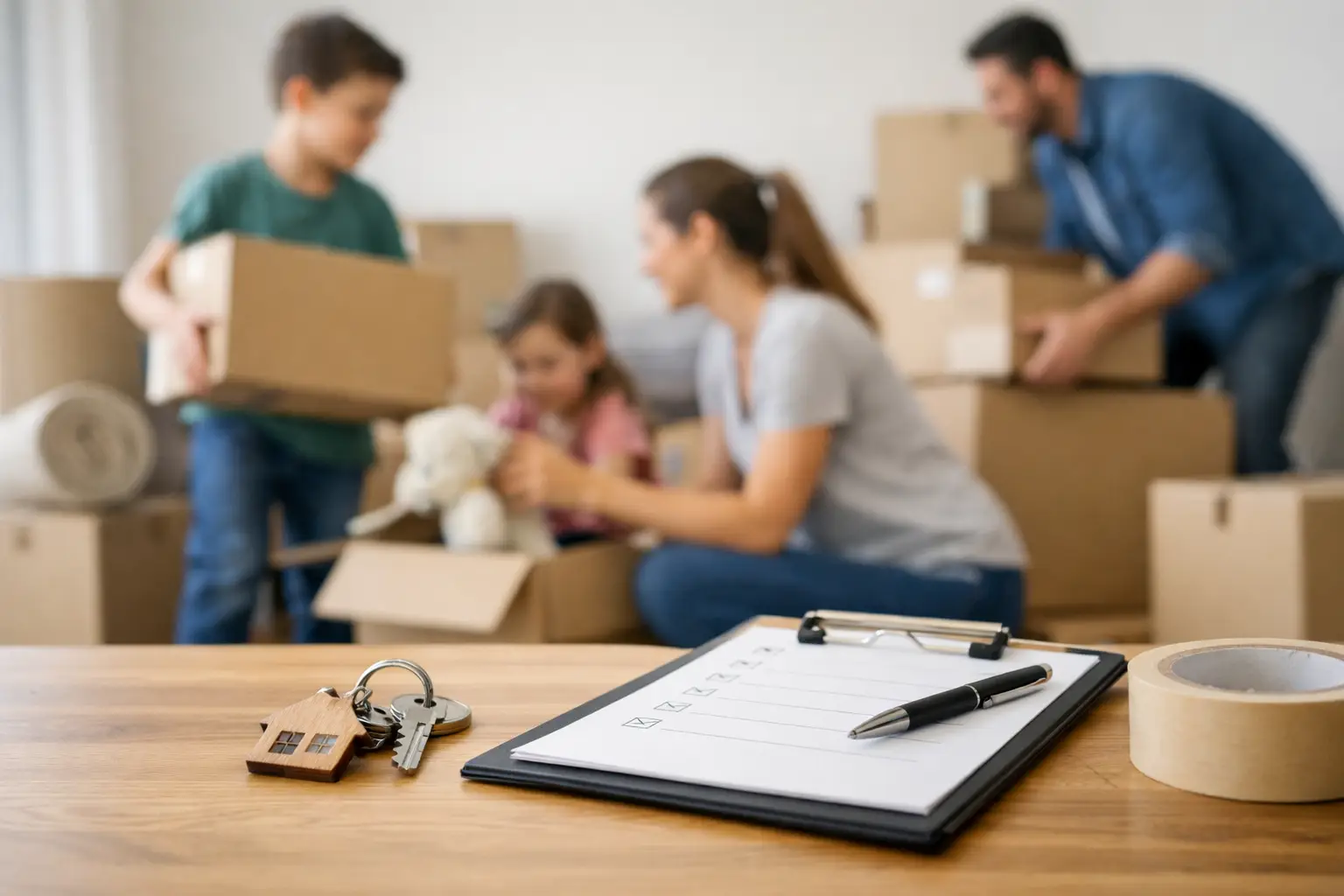
By 8am, someone usually can’t find the kettle, one child wants their favourite toy back out of a sealed box, and the keys suddenly become the most important item in the house. That is exactly why a moving day checklist for families matters. It gives the day some structure, cuts down avoidable stress, and helps you keep children safe while the practical work gets done.
For families, moving day is rarely just about loading boxes. You are balancing timings, access, school items, snacks, naps, documents, and the simple fact that children do not stop needing attention because a van has arrived. A good plan does not need to be complicated, but it does need to be realistic. The aim is not a perfect move. It is a controlled one.
What to prepare the night before
The easiest moving days start before moving day itself. By the evening before, your packing should be effectively finished apart from the essentials you still need overnight. That includes chargers, toiletries, medication, a kettle if you want tea first thing, and a small set of plates or cups.
It also helps to separate what is travelling with you from what is going in the van. Important documents, house keys, passports, tenancy paperwork, wallets, mobile phones, school bags, and any valuables should stay under your control. The same goes for medicines and anything a child may suddenly need during the day. If it would cause a real problem to lose access to it for a few hours, keep it in your car or with you personally.
Clothes are another common oversight. Each family member should have one clearly packed bag with a change of clothes, sleepwear, basic toiletries, and anything needed for the next morning. After a long move, nobody wants to open ten boxes to find pyjamas.
A practical moving day checklist for families
On the day itself, priorities matter more than speed. Before the removals team starts loading, do a final walk through each room and check that boxes are sealed, labelled, and placed where they can be collected without confusion. If boxes for the kitchen are mixed with toys and bedding, the unloading stage becomes slower and more frustrating.
Make sure pathways are clear. Remove loose shoes, cables, small furniture, and anything children might trip over. If you live in a flat or terrace with tighter access, this step is even more useful because space disappears quickly once moving begins.
Then focus on the essentials:
- Keep mobile phones fully charged and have charging cables with you
- Set aside keys, documents, wallets, and medication
- Prepare drinks, snacks, and easy food for children
- Confirm where the children will stay during loading and unloading
- Check parking and access arrangements at both properties
- Keep cleaning supplies and basic toilet roll easy to reach
- Do a final meter reading if needed
- Check cupboards, loft space, sheds, and under beds before leaving
This is also the right moment to confirm any large or awkward items. Beds, wardrobes, sofas, and white goods often take the most time, especially if they need dismantling or careful manoeuvring through narrow hallways. If a team knows in advance what requires extra handling, the whole move runs more smoothly.
Keeping children safe and settled
Families often underestimate how tiring and unsettling moving day can be for children. Even confident children can become clingy, upset, or overexcited once the house starts emptying. The best approach depends on age, temperament, and how busy the move will be.
For toddlers and younger children, having them looked after by grandparents, friends, or a trusted childminder can make the day much easier. It reduces risk around heavy lifting and gives you more freedom to focus on access, paperwork, and decisions. That said, this is not always possible, and many families prefer to keep children close by.
If your children will be with you, create one safe room or area that stays clear of lifting routes. Keep that space stocked with snacks, drinks, comfort items, and a few familiar activities. Tablets and screens are not always ideal, but on moving day they can be extremely useful. This is one of those times when keeping the peace matters more than sticking to the usual routine.
Teenagers are different. They can help, but only if the jobs are clear and sensible. Asking them to carry small labelled boxes, keep younger siblings occupied, or check rooms are empty can be genuinely useful. Asking them to manage the move like adults usually backfires.
What should travel with you, not in the van
A family move always has a category of items that should not be packed away with general household goods. This is partly about security and partly about practicality. If you arrive before the van, if unloading is delayed, or if you simply need something quickly, these items need to be accessible.
Keep your essentials bag with you and include documents, keys, medications, chargers, water, wipes, snacks, a basic first aid kit, and a small amount of cash. For babies or younger children, add nappies, spare clothes, bottles, comforters, and anything needed for naps. For older children, school items or favourite belongings can also make the first evening easier.
If you have jewellery, laptops, tablets, or sentimental items, it is usually better to transport them yourself. Professional movers handle possessions carefully, but some items are too personal or too high value to place in general loading. That is not about distrust. It is simply good risk management.
At the old property before you leave
The final check at your old home is where many small but costly mistakes happen. Families are often pulled in different directions at this stage, which is why a simple room-by-room check is worth doing even when you are tired.
Open every wardrobe, cupboard, drawer, and storage space. Check behind doors, under beds, inside the washing machine, and in the loft or shed if you have one. Children’s belongings are especially easy to miss because toys, shoes, and school items often end up in odd places during the last week of packing.
You should also leave the property in a reasonable condition. Exactly how much cleaning is needed depends on whether you are renting, selling, or moving between family homes. A full deep clean may not be realistic on the day, but wiping surfaces, emptying bins, and taking the last rubbish with you can save trouble later.
First priorities at the new home
The first hour in the new place sets the tone for the evening. Do not try to unpack everything at once. Start with access, safety, and the rooms your family needs first.
Get beds, bedding, and basic kitchen items positioned early. If children are tired, the ability to make up one bed and find toothbrushes quickly matters more than sorting decorative items or unpacking every cupboard. The bathroom should also be usable straight away, with toilet roll, hand soap, and towels easy to find.
If possible, direct boxes into the correct rooms as they come off the van. This is one of the simplest ways to reduce work later. A well-labelled box in the right room is one less thing to move twice.
This is where practical moving support makes a real difference. A team that can load efficiently, protect furniture properly, and help with dismantling and reassembly removes pressure from the parts of the day that are hardest to manage with children around. That is often more valuable than families expect, especially in London where parking, stairs, and tight access can slow everything down.
Common family moving day mistakes
Most moving day problems are not dramatic. They are small issues that build into delays and stress. Families often pack too much into the final morning, assume children will just adapt to the disruption, or forget to keep one bag of true essentials separate.
Another common mistake is underestimating time. Lifts break down, keys are delayed, parking is awkward, and children need feeding at the least convenient moment. Building in a little extra time is not pessimistic. It is practical.
The last one is trying to do every job personally. There is a difference between staying in control and taking on too much. If the move involves heavy furniture, multiple floors, or a full family home, proper removals support can save both time and damage. Companies like The Kings Removals are often most useful not because the move is impossible without them, but because they make it more manageable, more protected, and far less chaotic.
A family move does not need to feel calm every minute to go well. If your essentials are close, your children are safe, and the main jobs happen in the right order, you are already doing the important part right.