
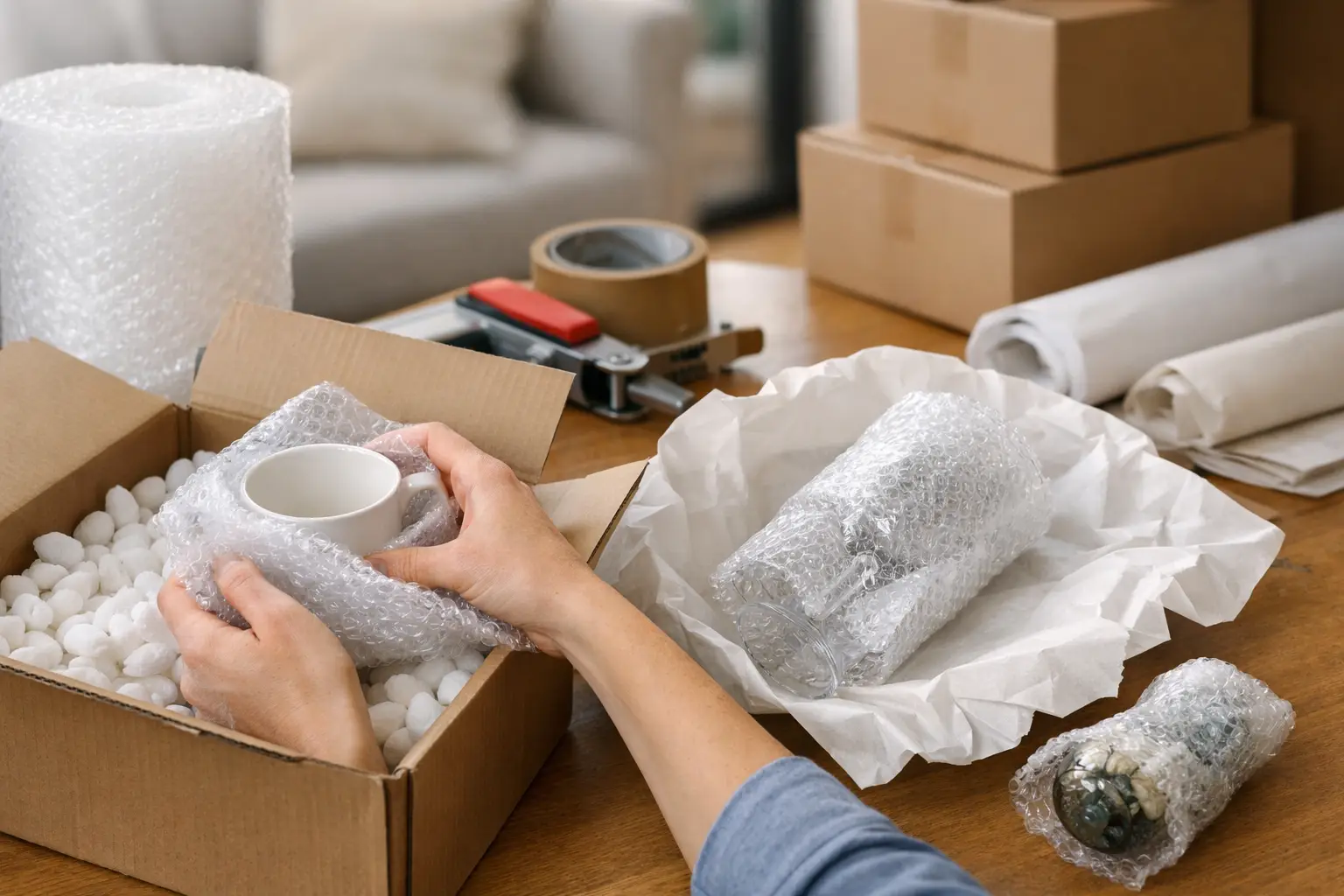
One cracked plate is annoying. A shattered mirror, damaged TV or broken heirloom can turn moving day into an expensive problem. If you are wondering how to pack fragile items for moving, the good news is that most breakages happen for predictable reasons – too much empty space in boxes, the wrong packing materials, rushed labelling or poor loading.
The safest approach is simple: wrap properly, choose the right box, keep weight sensible and pack for movement, not just storage. A box may look fine when it is sitting still in your hallway. It is the lifting, stacking, loading and road vibration that expose weak packing.
How to pack fragile items for moving without damage
Start by thinking in categories rather than trying to pack the whole house at once. Glassware, crockery, mirrors, lamps, artwork and electronics all need slightly different handling. Treating every delicate item the same usually leads to wasted materials in some boxes and not enough protection in others.
Before packing, clear a workspace and gather what you need. Strong double-walled boxes, packing paper, bubble wrap, packing tape and marker pens are the basics. For very delicate or high-value pieces, cardboard dividers and corner protectors can make a real difference. If you are using old boxes, check that the base is still firm. A weak box is a false economy.
A common mistake is overfilling large boxes with heavy fragile items. It is better to use smaller boxes for breakables so they stay easier to carry and less likely to split underneath. Heavy and fragile is a bad combination when a box has to be taken down stairs or lifted into a van.
Wrap each item on its own
Fragile items should not touch each other directly inside the box. Every glass, mug, plate or ornament needs its own layer of protection. Packing paper is usually the best first layer because it sits neatly around the item and does not leave ink marks the way newspaper can.
Bubble wrap is useful, but it works best as a second layer rather than the only one. If you rely on bubble wrap alone, awkward corners and handles often stay exposed. Wrap tightly enough that the material stays in place, but not so tightly that pressure builds on delicate parts.
Then line the bottom of the box with cushioning before anything goes in. Crumpled paper, foam or a layer of wrap helps absorb shocks from below. The same rule applies at the top and around the sides. Protection matters just as much outside the item as on it.
Fill empty space properly
The main reason fragile boxes break internally is movement. If items can shift, they will knock into each other every time the box is carried or the van turns a corner. Once everything is inside, fill all gaps with paper or other soft packing material until the contents feel secure.
There is a balance here. You want the contents held firmly, but you do not want to force extra filler into the box so tightly that it puts pressure on glass or ceramic. If the flaps do not close easily, repack it. Good packing should feel stable, not compressed.
Packing plates, glasses and kitchenware
Kitchen breakables are often the most time-consuming part of a house move because there are usually more of them than people expect. The safest method is to pack plates vertically, like records on a shelf, rather than stacking them flat. Vertical packing reduces direct downward pressure and usually lowers the chance of cracking.
Wrap each plate separately and add extra paper or bubble wrap between them. Bowls should be wrapped one by one as well, with padding between nested pieces. Mugs need attention around the handles, which are often the first part to snap.
Glasses and stemware need the most care. Stuff the inside lightly with paper, wrap the whole glass and protect stems with extra cushioning. Divided boxes are especially useful here because they stop contact between pieces. If you do not have dividers, create firm separation with folded cardboard and generous padding.
Do not make kitchen boxes too heavy. Even if the items are packed well, a box full of crockery can become difficult to handle safely. Several smaller boxes are usually better than one oversized one.
How to pack fragile items for moving such as mirrors and artwork
Flat fragile items need a different approach because the risk is less about impact between objects and more about surface pressure, corner damage and bending. Mirrors, framed prints and glass-fronted pictures should be wrapped with protection on the corners first, then covered fully.
If possible, use mirror cartons or adjustable picture boxes. They hold flat items more securely than a standard moving box. If that is not available, sandwich the item between sturdy cardboard sheets after wrapping, then tape the package so it stays rigid.
Avoid laying large mirrors or framed artwork flat under other items. Upright transport is usually safer, provided the piece is secured properly and cannot slide. For valuable or sentimental pieces, extra protection is worth it. These are the items people regret rushing.
Packing lamps, ornaments and awkward shapes
Lamps often get damaged because they are packed as one piece when they really should be separated. Remove bulbs, lampshades and detachable fittings before wrapping. Bulbs should be packed on their own, with plenty of cushioning. Shades can crush easily, so they should not be squeezed into a box with heavier items.
Ornaments and decorative pieces vary in shape, which makes them harder to pack quickly. Handles, protruding details and thin bases all need attention. Wrap the most delicate parts first, then the item as a whole. If an object has an unstable shape, build padding around it inside the box so it cannot tip during transit.
This is also where judgement matters. Some low-value fragile items cost more in time and materials to pack professionally than they are worth replacing. Sentimental items are different, of course, but for everyday décor it can make sense to be selective.
Electronics and screens
If you still have the original box for a television, monitor or speaker, use it. Manufacturers design those boxes for safe transport. If not, choose a box with enough room for protective padding on all sides and pay close attention to corners.
Screens should be covered with a soft layer first to avoid scratches, then wrapped more securely. Cables, remotes and accessories should be bagged and labelled separately so they do not rattle around against the device. Never let loose accessories travel in the same box as an unprotected screen.
For smaller electronics, anti-static protection can help, but careful cushioning and firm boxing matter most. Also think ahead to unpacking. If all your equipment arrives safely but the leads are mixed together, you have simply created a different problem.
Labelling and loading matter more than people think
A perfectly packed box can still be damaged if it is carried the wrong way or buried under heavier items. Label fragile boxes clearly on more than one side. Mark which way up they should travel if that matters.
That said, labels are only helpful if the loading is sensible. Fragile boxes should be stacked on top of heavier, sturdier boxes, not the other way round. Nothing loose should be left to slide around near mirrors, lamps or electronics. Good packing and good loading work together.
If you are hiring movers, tell them which boxes contain especially delicate or high-value items. Clear communication saves time and reduces handling mistakes. A professional team will usually spot risks quickly, but it still helps to point out anything that needs extra care.
When it is worth getting help
Packing fragile items yourself can save money, but it is not always the best trade-off. If you are short on time, moving from a larger property, or dealing with artwork, antiques or expensive electronics, professional packing can reduce both risk and stress.
This is especially true when the move involves stairs, tight hallways, long carrying distances or a busy London schedule where delays quickly become costly. The practical value is not just the materials. It is knowing how to protect items for lifting, loading and transport in real conditions.
At The Kings Removals, we see the difference proper packing makes on moving day. Boxes that are packed for transport move faster, stack better and arrive in better condition.
If you remember one thing, make it this: fragile items do not break because they are fragile. They usually break because they were allowed to move, take pressure or sit in the wrong box. Pack with the journey in mind, and your belongings stand a far better chance of arriving exactly as they left.