
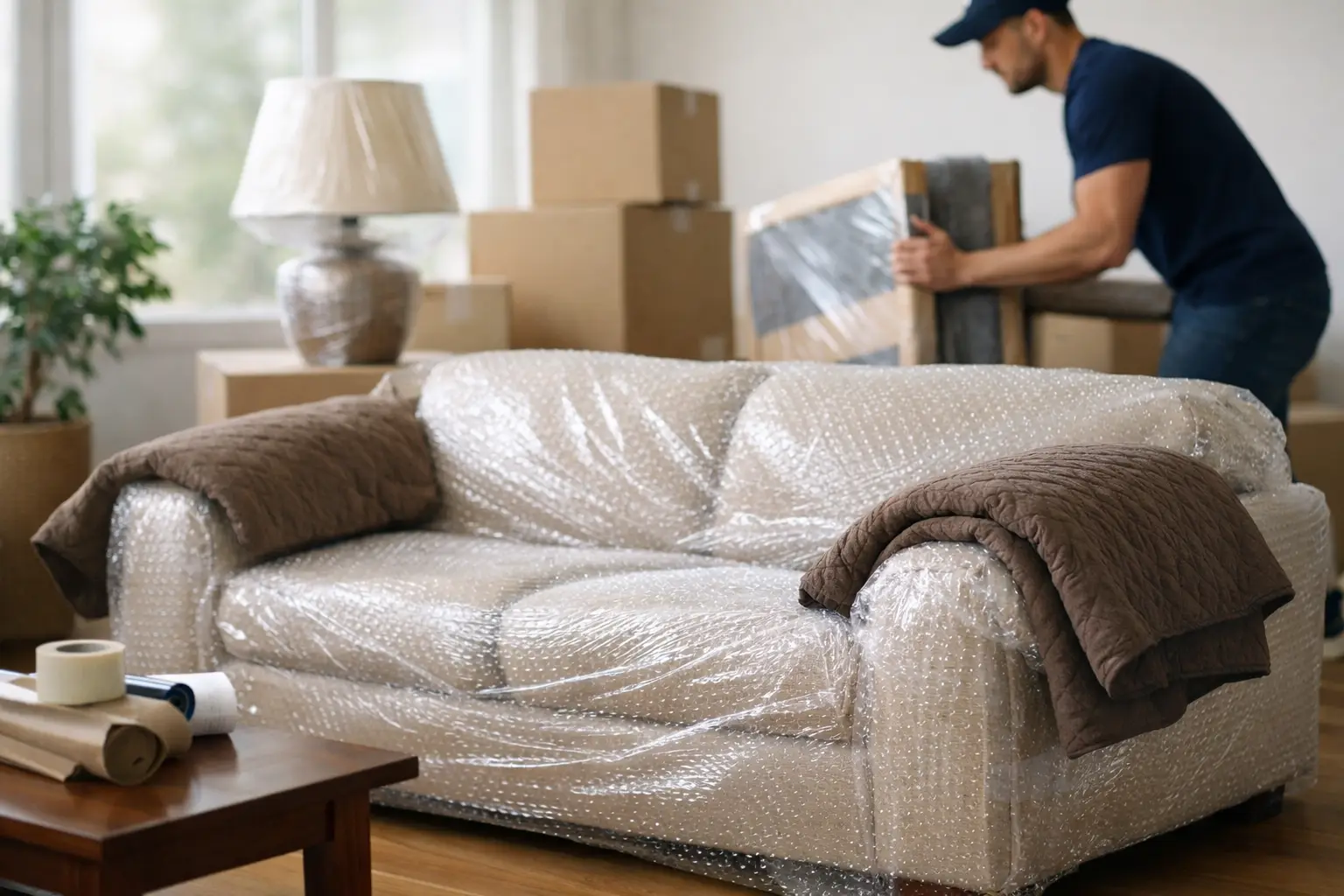
One scraped door frame, one gouge in a dining table leg, and a straightforward moving day suddenly becomes an expensive repair job. That is why furniture protection during moves is not just about wrapping things up neatly. It is about planning how each item will be handled, carried, loaded and secured from start to finish.
If you are moving out of a London flat, relocating a family home, or shifting office furniture on a tight schedule, the main risks are usually the same. Corners get knocked, polished surfaces get scratched, drawers slide open in transit, and heavy items are forced through spaces they do not fit. The right protection reduces those risks, but only if it matches the furniture and the route.
Why furniture protection during moves matters
Most furniture damage does not happen because an item is inherently fragile. It happens because the item was not protected for the way it was being moved. A solid oak chest can still chip on a narrow staircase. A sofa can still tear on an exposed door latch. A wardrobe can become unstable if it is carried full or moved without being dismantled where needed.
Good protection does three jobs at once. It shields surfaces from scratches and dirt, keeps moving parts secure, and makes the item easier and safer to handle. That last part matters more than many people realise. A properly wrapped and strapped piece is less likely to slip, tilt or catch on walls when being moved through tight halls or into a Luton van.
There is also a cost angle. Replacing protective materials is usually far cheaper than repairing veneer, reupholstering fabric, or replacing a broken glass panel. When clients ask how to avoid moving day damage, the answer is rarely complicated. It is usually about using the right materials, not rushing awkward lifts, and loading the vehicle properly.
The right protection depends on the item
Not all furniture needs the same treatment. A dining chair, a marble-top side table and a large fabric corner sofa each need a different approach. One common mistake is relying on a single material for everything. Cardboard alone is too basic for many items, while plastic wrap alone can trap dirt against delicate finishes if used badly.
Wooden furniture
Wooden items are especially vulnerable at corners, edges and legs. Painted and varnished surfaces can mark easily if they rub against another item in transit. Furniture blankets or padded covers are often the safest first layer here, with extra padding on sharp points. If an item has removable legs, shelves or glass inserts, taking those off first usually reduces the chance of damage.
Drawers and doors should be secured before lifting. That does not always mean taping directly onto the furniture, because adhesive can damage some finishes. A better option is usually stretch wrap applied over a protective layer, or tying components shut with soft securing straps.
Upholstered furniture
Sofas, armchairs and padded headboards need protection from dirt, moisture and snags. Clean covers, sofa bags or wrapped blankets help keep fabric safe while moving through communal entrances, lifts and pavements. With leather, pressure points matter. Tight wrapping in the wrong place can leave marks, so the covering should be snug enough to stay in place but not so tight that it compresses the material.
Feet should also be checked. A sofa leg catching on a threshold can damage both the furniture and the floor. In some cases, removing the legs makes the item easier to protect and simpler to manoeuvre.
Glass, mirrored and high-gloss items
These are the pieces that need the most care and the least improvisation. Glass shelves, mirrored doors and glossy finishes can all be damaged by direct contact with rough packing surfaces. They should be wrapped with suitable padding and kept upright where possible. Loading them flat under heavier items is asking for trouble.
For mirrored wardrobes or display units, dismantling is often the safer route. It may take longer at the start, but it usually prevents far more costly problems later.
Packing materials that actually help
The goal is not to use more material than necessary. It is to use the right combination. Furniture blankets, bubble wrap, cardboard edge protectors, mattress covers, sofa covers and stretch wrap all have a place, but they work best when used with purpose.
Furniture blankets are one of the most useful options because they protect against impact and friction. Stretch wrap is good for keeping blankets in place and securing loose parts, but it should not be the only barrier for delicate surfaces. Bubble wrap is helpful on vulnerable sections, though placing it directly on certain polished finishes for long periods can be risky if heat builds up.
Cardboard edge protection is simple but effective on corners of tables, wardrobes and shelving units. Dust sheets and thin plastic covers can keep items clean, but they do not offer much shock protection on their own. If your move includes temporary storage, breathable coverings may also matter, especially for upholstered items and wood furniture that should not sit wrapped in condensation.
Handling matters as much as wrapping
Even the best wrapping cannot compensate for poor lifting. A table dragged on one side will strain the joints. A chest of drawers carried while full will put weight where it should not be. A wardrobe forced around a landing may split at the frame even if the outside is padded.
This is why furniture protection during moves always includes handling technique. Heavy items should be emptied first. Loose shelves, lamps, glass panels and hardware should be removed and packed separately. Large furniture should be measured against doorways, stairwells and lift access before anyone starts carrying it.
Team lifting is often the difference between a smooth job and a damaged one. Some items can technically be moved by one person, but that does not mean they should be. Awkward weight distribution, narrow staircases and tight turns are where extra hands prevent impact damage.
Loading the van properly
A well-loaded van protects furniture better than extra wrapping ever will. The heaviest and most stable items should normally go in first, positioned to create a secure base. Sofas and mattresses can then act as buffers in some layouts, while delicate pieces need to be isolated from hard movement and shifting pressure.
Strapping is important. If furniture is free to slide during braking or cornering, padding will only do so much. Items should be secured so they stay put without being crushed. There is a balance here. Over-tightening can damage wood frames or upholstery, but under-securing leaves pieces vulnerable throughout the journey.
Space should also be used carefully. Gaps are not always a good thing if they allow items to move. At the same time, overpacking the load can create pressure points and make unloading more difficult. Good loading is about stability, access and weight distribution, not just fitting everything in.
When dismantling is the safer choice
People sometimes avoid dismantling because they want the move finished faster. But for wardrobes, bed frames, large desks and some dining tables, dismantling is often the most practical form of protection. It reduces bulk, lowers the risk of catching corners, and makes carrying safer for both the item and the people moving it.
It does add a step, and it means keeping fixings organised properly, but in many London properties with narrow stairs or limited lift space, it is the sensible option. Reassembly at the other end also tends to be quicker when parts have been packed methodically rather than forced through the property in one piece.
Professional help reduces the margin for error
If you are moving a few lightweight items across town, a DIY approach may be fine. But once the job includes bulky furniture, valuable pieces, awkward access or a tight timetable, professional support becomes less about convenience and more about risk control.
Experienced movers know when an item needs blanket wrapping instead of basic covering, when dismantling will save time overall, and how to protect furniture while loading a van with tail lift access. They also bring the materials and labour needed to keep the move moving. That matters if you are trying to avoid delays, damage claims and last-minute stress.
For many customers, the biggest benefit is clarity. You want to know your furniture is being handled properly, that fragile pieces are accounted for, and that the team can adapt if the move changes on the day. That practical flexibility is often what keeps a move on track.
The Kings Removals sees this first-hand on residential and commercial jobs across London. The moves that go most smoothly are rarely the ones with the least furniture. They are the ones where protection, handling and loading have been thought through properly before the first item leaves the room.
If you want fewer problems on moving day, focus less on packing faster and more on protecting smarter. A bit of preparation at the start can save your furniture, your walls and your budget by the time the last item comes off the van.