
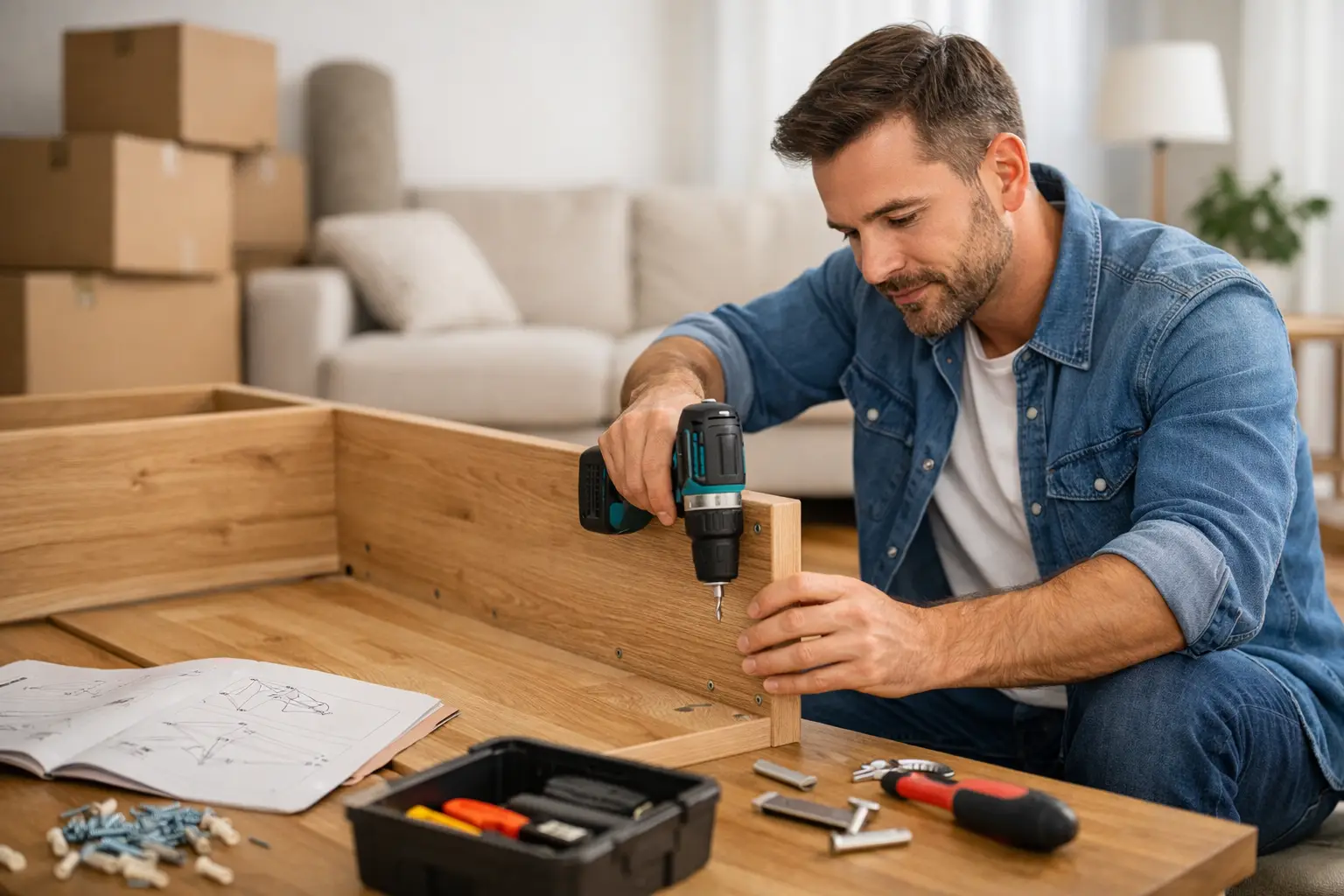
The boxes can wait a few hours. The bed cannot. When you arrive in a new home or office, furniture assembly after moving is often the job that decides whether the day ends in order or frustration. If key items are rebuilt properly and in the right sequence, the whole move feels under control. If not, rooms stay blocked, parts go missing and small mistakes turn into damaged furniture.
That is why assembly should never be treated as an afterthought. It is part of the move itself, not a separate chore to squeeze in later. Wardrobes, beds, desks and dining tables all need space, time and the right handling, especially after they have been dismantled for transport.
Why furniture assembly after moving needs a plan
Many people assume reassembly is the easy bit. In practice, it is where tiredness sets in and shortcuts start. By the time the van is unloaded, you may already be dealing with keys, parking, building access and a pile of boxes in every room. Trying to rebuild large furniture in that environment without a plan usually slows everything down.
A better approach is to decide in advance what must be assembled first, where each item will go and whether access allows full assembly in the final room. A king-size bed frame might fit through a hallway only in parts. A wardrobe might need to be built upright, which means checking ceiling height before starting. These details sound small, but they save a lot of rework.
For households, the priority is usually simple: beds first, then storage, then tables and other non-essential pieces. For offices, desks and storage units often come first so the workspace can function quickly. The right order reduces clutter and helps you settle in without turning every room into a temporary storage zone.
What usually goes wrong after the move
The most common problems are not dramatic. They are the annoying, time-consuming issues that delay everything else. Screws get mixed together, fittings end up in the wrong box, instruction manuals disappear, and panels are placed in the wrong room. Then there is the physical strain. Lifting, aligning and tightening heavy sections after a long moving day is where chips, scratches and wobbly assembly often happen.
Flat-pack furniture can be particularly awkward. Some pieces do not respond well to being dismantled more than once, especially if the original fixings have already loosened. Older wardrobes and cheaper particleboard units may need a gentler approach than newer solid wood items. It depends on the build quality, the condition before the move and how carefully the item was taken apart.
There is also the issue of walls and floors. Reassembly in a tight London property can mean sharp turns, narrow staircases and freshly painted surfaces. Moving one wardrobe panel the wrong way can mark a wall in seconds. Good assembly is not just about getting the furniture standing again. It is about protecting the property while you do it.
The best order to assemble furniture after moving
If you want the quickest route to a liveable home, start with the pieces that restore basic function. Beds are usually first because they are hard to improvise. A sofa may be next if the living room is your main shared space, though some sofas only need legs attached rather than full assembly.
After that, focus on large storage items such as wardrobes and chest units, particularly if boxes need to be cleared from bedrooms. Desks come early if anyone is working from home the next day. Dining tables, sideboards and decorative pieces can usually wait until the practical essentials are done.
This sequence matters because assembled furniture takes up space. Once the biggest items are back in place, it becomes much easier to sort the remaining boxes around them. It also prevents the common mistake of filling a room with loose items, only to realise there is no room left to rebuild the wardrobe properly.
Start with room placement before assembly
Before opening a tool bag, confirm where everything is going. Even a few centimetres can make a difference with large items. Check door swings, plug sockets, radiator clearance and whether drawers can fully open. Rebuilding a bed or wardrobe in the wrong spot means extra lifting and more risk of damage.
Keep fittings with the right item
If furniture was dismantled properly before transport, each item should have its own labelled fittings bag. If not, sort this first. It may feel like lost time, but it is much faster than testing random screws halfway through a build. For larger moves, taking photos before dismantling also helps speed up reassembly.
Tools and preparation make a bigger difference than people expect
Most assembly delays come down to basic preparation. The right screwdriver bits, Allen keys, a mallet, protective floor covering and a knife for packaging all save time. So does decent lighting. New properties are not always fully set up on move-in day, and trying to assemble furniture in a dim room is an easy way to miss fixings or damage edges.
You also need enough working space. That means moving cartons aside before starting, not trying to build around them. Some furniture needs to be laid flat during assembly and then lifted upright. If the room does not allow that, the item may need to be partly assembled elsewhere and carried in carefully.
This is one reason professional moving teams often handle dismantling and reassembly together. The same people who took the item apart already know how it was packed, which fittings belong to it and which parts need extra care. That continuity cuts down on guesswork.
When DIY assembly makes sense and when it does not
Not every item needs professional help. A simple coffee table, a basic bed frame or a small shelving unit may be fine to handle yourself if you have the time and tools. If the furniture is lightweight, inexpensive and easy to replace, the risk is lower.
But larger or more valuable items are different. Fitted-style wardrobes, extendable dining tables, heavy office desks, bunk beds and complex flat-pack systems are less forgiving. If one panel splits or a fitting strips, the repair can cost more than the assembly support would have done in the first place.
There is also the question of energy. After a full moving day, many people underestimate how tiring careful reassembly can be. What seems manageable at 9 am often feels very different by late afternoon. If speed, safety and getting settled quickly matter, it usually makes sense to arrange assembly as part of the move rather than leave it hanging over the next few days.
Furniture assembly after moving for offices and small businesses
For commercial moves, the issue is not just convenience. Delayed assembly can affect trading, staff productivity and access to equipment. Desks, meeting tables, shelving and storage units need to be in place quickly if a team is expected to work the next morning.
Office furniture can also be heavier and more repetitive to assemble, especially when there are multiple workstations. A practical plan is to prioritise operational zones first – reception, core desks, storage for files or stock, and any shared equipment areas. That gets the business functioning while less urgent areas are finished afterwards.
Where timing is tight, coordinated moving and assembly support is often the safest route. It keeps the job with one team, reduces handling and avoids the stop-start delays that happen when transport and setup are treated as separate tasks.
How to make the whole process smoother
The easiest way to avoid problems is to think about assembly before moving day, not after it. Decide which items need dismantling, label fittings clearly and flag anything fragile or awkward to handle. If access is difficult, such as stairs, tight landings or restricted parking, factor that in early.
It also helps to be realistic about what can be done in one day. A one-bedroom flat with a few key items is very different from a family home with multiple wardrobes, beds and storage units. Good planning means matching the team size, van space and time allowed to the actual workload. That is often where a practical removals company adds value – not with vague promises, but by helping you scope the job properly from the start.
For many London moves, flexibility matters just as much as strength. Access times change, landlords run late, keys are delayed and plans shift. A service that can handle transport, safe carrying, dismantling and reassembly in one booking reduces the number of moving parts you need to manage.
The Kings Removals works with exactly that reality in mind, helping customers get furniture safely moved and properly reassembled so the property becomes usable sooner, with less stress and less risk of damage.
If you are planning a move, think beyond getting the boxes through the door. The real finish line is when the bed is built, the wardrobe is standing straight and the room starts working like a home or office again.