
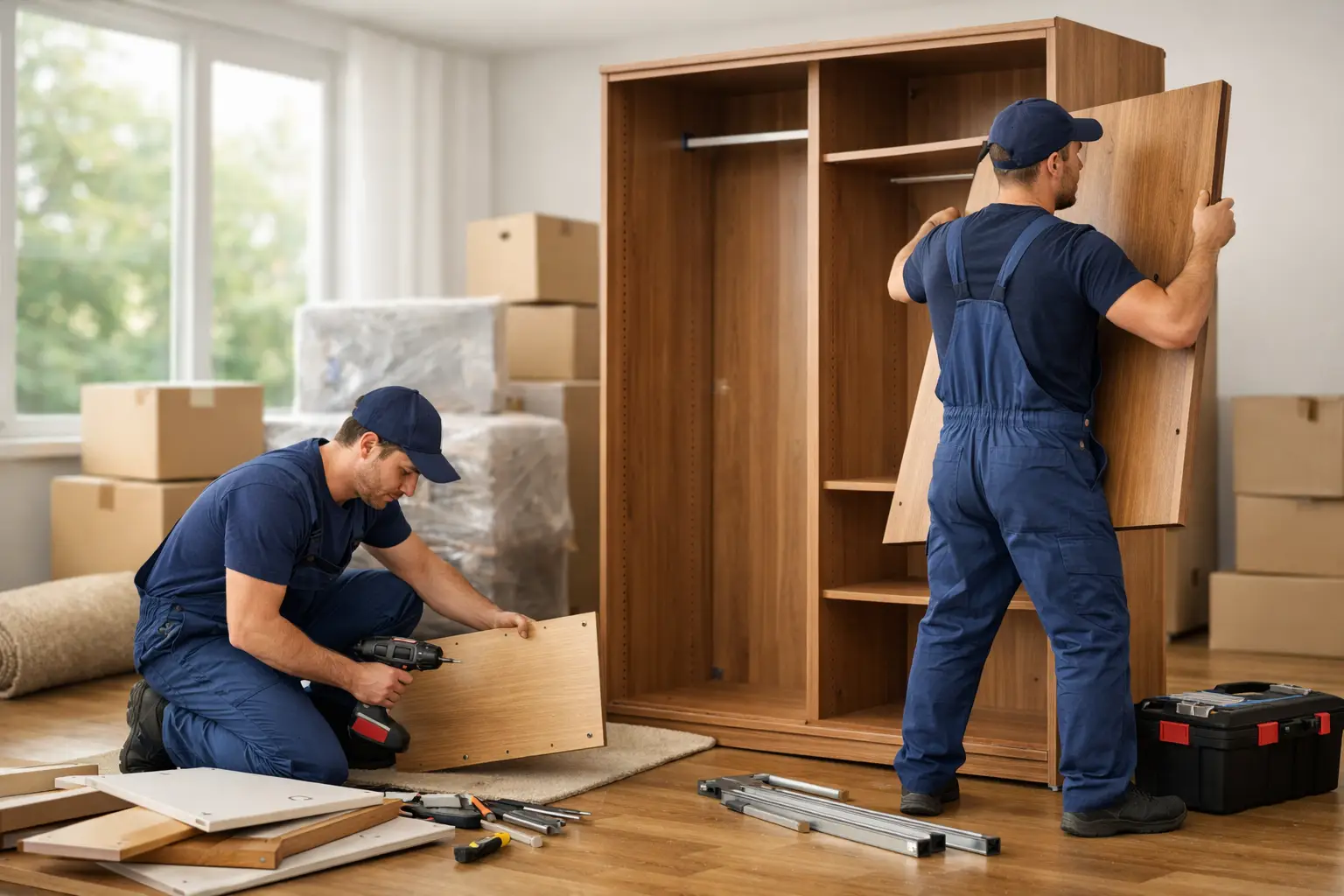
A wardrobe can be one of the last things you think about when booking a move – until it will not fit through the bedroom door, down a tight stairwell or into the lift. So, can movers take apart wardrobes? In most cases, yes. A removal team can dismantle and reassemble many wardrobes as part of a planned move, provided the job, furniture type and access have been discussed beforehand.
For London moves, this service often makes the difference between a smooth collection and a frustrating delay. Tall freestanding wardrobes, large sliding-door units and modular flat-pack furniture can be awkward to carry safely in one piece. Taking them apart may protect the wardrobe, the property and the people moving it.
Can movers take apart wardrobes safely?
Professional movers regularly dismantle standard household furniture, including wardrobes, bed frames, tables and shelving. The work normally involves removing doors, shelves, drawers, rails and panels where necessary, then keeping fittings together so the item can be rebuilt at the new property.
That does not mean every wardrobe should automatically be dismantled. A solid, compact unit that fits comfortably through both properties may be safer and quicker to move intact. On the other hand, forcing a large wardrobe around a landing can damage door frames, walls, mirrors or the furniture itself. The right approach depends on its construction, condition and the access route.
A good removal team will assess the item before lifting. They will look at dimensions, turning space, stairs, lift access and whether the wardrobe is stable enough to travel assembled. If dismantling is the sensible option, it should be agreed in advance and allowed for in the booking.
When dismantling a wardrobe is usually necessary
Dismantling is commonly needed where a wardrobe is taller or wider than the available doorway, where a narrow staircase has sharp turns, or where access to an upper-floor flat is limited. It is also helpful for wardrobes with heavy mirrored doors, sliding mechanisms or large panels that are vulnerable during transport.
Flat-pack wardrobes are a frequent example. Many are designed to be assembled inside a room and may not be strong enough to move as a complete unit. Moving one whole can put pressure on cam locks, dowels and thin backing boards. Separating it into manageable sections often reduces the risk, although it must be done carefully to avoid weakening the panels.
Built-in or fitted wardrobes are different. These are fixed to the wall and may be made to measure for that room. A removal team can sometimes remove selected components, but full removal is not always practical or worthwhile. It can leave wall damage, and the unit may not fit or function properly in the new home. If you are renting, check with your landlord before any fitted furniture is altered.
Antique, bespoke or damaged wardrobes also need a more cautious decision. Older furniture may have hidden weaknesses, glued joints or delicate veneer. In some cases, it is safer to protect and carry it as one piece. In others, a specialist furniture service may be more suitable than routine dismantling.
What movers normally do during wardrobe dismantling
Once the plan is clear, the team will prepare the wardrobe before taking it apart. Drawers are usually emptied, hanging clothes removed and any loose internal shelves taken out. Glass, mirrors and doors may be removed separately and protected for transport.
The dismantling itself should be methodical rather than rushed. Components need to be kept in sensible groups, and screws, bolts and brackets should be bagged and labelled. This small detail matters at the other end of the move. A wardrobe may look simple, but missing fittings or mixed-up rails can add unnecessary time during reassembly.
Panels and doors are then wrapped or covered to reduce scuffs and edge damage. On a properly planned removal, the team loads larger pieces in a secure order and uses blankets, straps and suitable protection inside the vehicle. This is especially important for wardrobe doors, which can flex or scratch if left unsecured.
At delivery, the team brings the parts into the correct room before rebuilding. This is worth confirming before work starts, particularly if bedrooms are upstairs or if the new property has limited parking. Reassembling the wardrobe in its final position prevents it having to be moved again across freshly laid flooring or through a narrow doorway.
What you should tell your removal company before moving day
Clear information allows movers to bring the right team, tools and time allowance. Tell them the wardrobe’s approximate height, width and depth, whether it has sliding or mirrored doors, and whether it is flat-pack, solid wood, fitted or antique. Photos are often the quickest way to show what is involved.
You should also mention access at both addresses. Include floor numbers, lift availability, narrow stairs, restricted parking, long walks from the vehicle and any tight corners. A ground-floor house with a wide hallway is a very different job from a fourth-floor flat with no lift.
If you still have the assembly instructions, keep them available. They are particularly useful for wardrobes with unusual fittings or complicated sliding-door systems. Do not worry if the instructions are gone, but let the team know the manufacturer or model if you can.
It also helps to say whether you want reassembly included. Some customers only need help getting furniture downstairs and into storage. Others want the wardrobe rebuilt and ready to use in the new bedroom. These are different levels of service, so confirming this at quotation stage avoids surprises on the day.
Prepare the wardrobe before the team arrives
Movers can handle the physical work, but a few simple steps from you keep the job efficient. Empty the wardrobe completely, including drawers, top shelves and internal organisers. Clothes can go into boxes, suitcases or wardrobe cartons if you have them. Leaving loose items inside makes the unit heavier and can cause internal damage.
Remove personal valuables, documents and jewellery yourself. Also clear a route from the wardrobe to the exit by moving small furniture, rugs, shoes and cables. The team needs safe space to work, especially when handling long panels or heavy doors.
Avoid dismantling part of the wardrobe yourself unless you are confident about the construction. A half-disassembled unit can be unstable, while lost fittings can delay reassembly. If you have already taken anything apart, keep each set of screws together and let the movers know exactly what has been done.
Will dismantling cost extra?
It can, depending on the wardrobe and how the removal service is priced. Simple dismantling may be included within the booked time, while a large or complex unit will take longer and therefore affect an hourly quote. The key point is transparency: the removal company should know about the wardrobe before confirming the job.
Trying to save money by not mentioning a difficult item can have the opposite effect. If the team arrives without enough time, suitable tools or sufficient manpower, the move may be delayed. A straightforward description and a few photos make it easier to receive an accurate estimate from the start.
With The Kings Removals, customers can arrange a team sized to the job, from a man and van service to larger removal support. Discussing furniture dismantling alongside packing, access and transport needs helps create a practical plan rather than treating the wardrobe as an afterthought.
Common concerns about wardrobe reassembly
People often worry that a flat-pack wardrobe will not be as stable after a move. That concern is reasonable. Particleboard furniture can wear over time, particularly if it has been assembled and dismantled several times. A careful team can reduce the risk, but no one should promise that an already weakened flat-pack unit will perform like new.
There is also the question of responsibility for pre-existing damage. Scratches, loose hinges, swollen panels from moisture or missing fittings should be pointed out before work begins. Clear communication protects both you and the movers, and makes it easier to decide whether dismantling is sensible.
For particularly valuable furniture, ask how it will be protected in transit and whether goods-in-transit insurance applies to the service. Insurance is useful protection, but careful handling, proper wrapping and a realistic access plan are what prevent most avoidable damage in the first place.
The practical answer for your move
Movers can take apart wardrobes, and often should when access, size or furniture design makes carrying the item whole unsafe. The best result comes from planning it before moving day: share photos, explain the access, empty the unit and confirm whether reassembly is required. That gives your removal team the time and information to move one of your largest bedroom items with far less stress.