
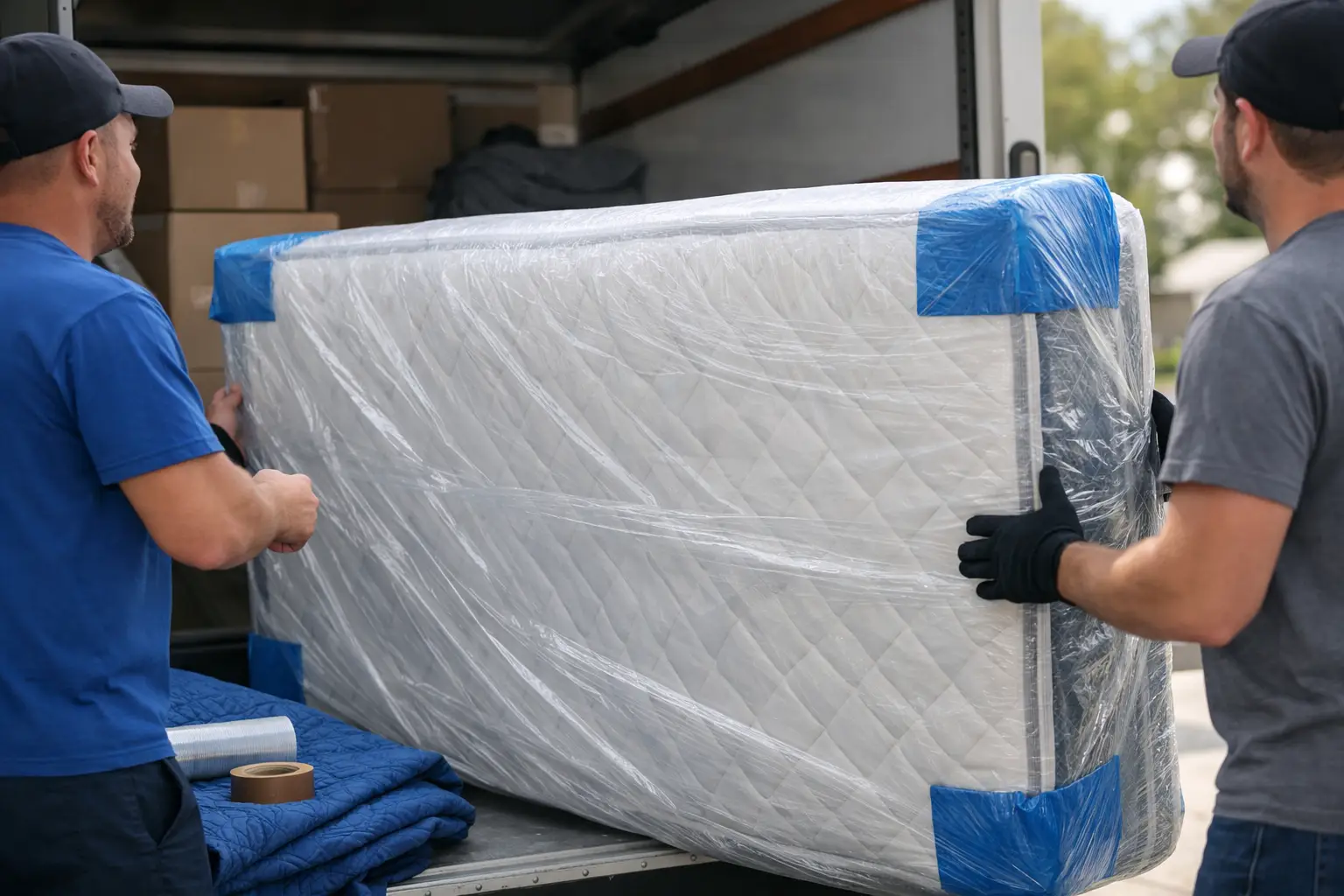
A mattress can pick up more damage in one move than in years of normal use. A damp pavement, an unclean van floor or one sharp furniture corner can leave it stained, torn or misshapen. Protecting mattresses during moving is therefore not an afterthought. It should be part of the plan before the first box is carried outside.
For most London moves, a mattress is also one of the most awkward items to handle. It is large, flexible and difficult to grip, particularly on narrow staircases, in lifts or through tight flat entrances. The right protection keeps it clean, but safe handling and sensible loading are what prevent permanent damage.
Why mattresses need more protection than you think
Mattresses are designed to support weight when lying flat on a bed base. They are not designed to be dragged across concrete, folded around a stair rail or compressed beneath heavy furniture in a van. Even a small tear in the outer fabric can allow dust and moisture into the filling.
Memory foam, hybrid and pocket-sprung mattresses need particular care. Foam can retain its shape if it is bent too far for too long, while springs can be affected by poor loading or excessive pressure. A traditional open-sprung mattress may appear tougher, but its fabric edges and internal structure can still suffer during transport.
London weather adds another risk. Rain can arrive halfway through loading, and a mattress left uncovered outside for even a few minutes may absorb moisture. Once damp gets into the padding, it can create odours or mould that are difficult to remove.
Protecting mattresses during moving before collection
Start by stripping the bed completely. Remove bedding, mattress toppers and protectors, then let the mattress air for a short time if it has recently been slept on. It needs to be fully dry before it goes into any protective cover. Wrapping a damp mattress traps moisture where you do not want it.
Check the mattress for existing marks, loose stitching or damaged handles. Taking a few clear photos is sensible, especially if the mattress is expensive or nearly new. It gives you a record of its condition and helps you spot any issue quickly after delivery.
Use a proper mattress bag
A purpose-made mattress bag is the simplest and most reliable option. Choose a thick plastic cover in the correct size, whether single, double, king or super king. It should cover the entire mattress, including the corners and edges, and be sealed with packing tape once it is inside.
A bag protects against dirt, rain, dust and accidental contact with other items. It is not a substitute for careful handling, however. Thin plastic can still tear when dragged over a rough surface, so the mattress should always be lifted rather than pulled.
If a mattress bag is not available, clean plastic sheeting can work for a short move. Wrap it around the mattress in overlapping layers and tape it securely. Avoid placing tape directly on the mattress fabric, as adhesive can leave marks or pull fibres when removed.
For added protection, place moving blankets around the wrapped mattress when carrying it through a communal hallway, down a staircase or past bulky furniture. Remove the blankets before loading if they are likely to slip, unless they can be secured safely.
Do not vacuum-pack a standard mattress
Some mattresses arrive vacuum-packed from the manufacturer, but that does not mean they can safely be compressed again. Household vacuum bags are not suitable for most sprung, hybrid or foam mattresses. The pressure may damage the internal structure and can make a large mattress even harder to manoeuvre.
If space is tight, the answer is usually better loading rather than more compression. A removal team can position the mattress upright along the side of a Luton van, where it takes up less floor space without being bent or crushed.
Carry it with control, not speed
Moving a mattress is normally a two-person job. The handles found on many mattresses are designed to help with positioning, not to carry the full weight over a long distance. Pulling hard on them can tear the fabric or cause someone to lose their grip.
Each person should hold the mattress from underneath or at the side, keeping it upright where possible. Carry it on its long edge through doorways and corridors, then turn it carefully rather than forcing it around corners. Take the route through the property before lifting, moving shoes, boxes and small furniture out of the way.
Staircases deserve extra attention. One person should be lower down the stairs and guide the weight, while the other keeps the mattress balanced from above. Do not rush on wet steps or try to carry a mattress one-handed while opening doors. This is where a second pair of hands makes a real difference.
For very heavy king-size, super king or thick hybrid mattresses, professional help is often worth arranging. A trained removal team can assess access, bring the right protective materials and coordinate the lift without risking damage to the mattress, walls or people carrying it.
Loading the mattress safely in the van
The safest position depends on the van, the mattress type and the rest of the load. In many cases, transporting the mattress upright against a clean, dry van wall is the best choice. It should be secured so that it cannot slide, fall forward or be pressed against a sharp edge during braking.
Keep the mattress away from items that can puncture its cover, including bed-frame bolts, tools, exposed metal parts and the corners of dismantled furniture. Place padded furniture or blankets between the mattress and any hard surfaces. Never stack wardrobes, drawers, washing machines or boxes full of books against it.
A mattress can travel flat in a van when there is a clean, level space and nothing heavy is placed on top. This may be preferable for some foam mattresses or for long-distance moves. The trade-off is that it uses more floor space, which can make loading less efficient. The key is to avoid bending it sharply and to secure the rest of the load around it.
A van with a tail lift can also reduce unnecessary handling. Rather than lifting a large mattress high into the vehicle, it can be placed onto the platform and raised steadily. This is especially useful for heavier mattresses and moves involving limited parking or busy London streets.
Common mistakes that cause avoidable damage
The most common problem is moving a mattress without any cover because the journey is short. A five-minute trip can still involve a wet pavement, a dusty lift or an unprotected van floor. A cover costs far less than professional cleaning or replacing a damaged mattress.
Another mistake is tying the mattress to the roof of a car. Aside from the safety concerns, wind and rain can damage it quickly, and straps can compress the edges. A mattress should travel inside a suitable vehicle, properly secured.
Avoid folding a mattress in half to fit it into a small car or through an unsuitable access route. Some flexible foam mattresses can tolerate a gentle bend for a short time, but pocket-sprung, hybrid and thick mattresses generally should not be folded. If it will not fit safely, use a larger van or arrange professional collection.
It is also unwise to leave the mattress wrapped in plastic for days after the move. Once it is inside the new property, remove the cover as soon as practical and allow the mattress to breathe. If it has been exposed to rain or feels damp, stand it in a dry, ventilated room before putting bedding back on.
A smoother move from bedroom to new home
Good preparation makes mattress protection straightforward. Measure the mattress and the narrowest parts of both properties, including stairwells, lifts and entrance doors. Confirm parking arrangements so the van can be positioned close to the building, reducing the distance it needs to be carried.
If you are booking a removal service, mention the mattress when requesting a quote. The team can allow for its size, bring a suitable cover if required and plan the right number of movers. The Kings Removals can also help with bed-frame dismantling and reassembly, so the mattress is not left waiting in a hallway while the rest of the room is organised.
Once the bed is rebuilt, place the mattress on a clean, dry base and inspect it before making the bed. A few careful minutes at collection, loading and delivery can protect a costly item and let you sleep properly on your first night in the new place.