
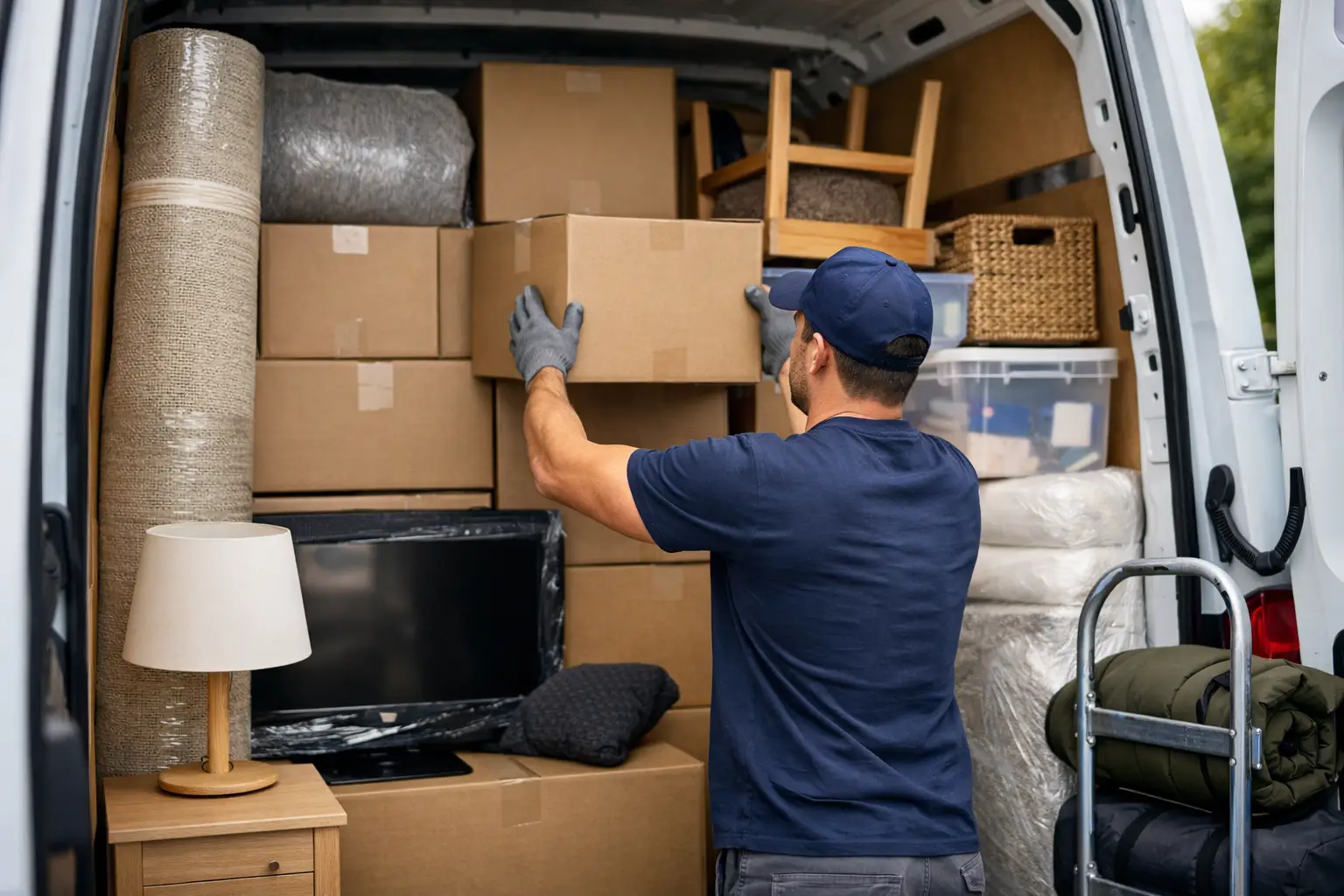
A removal van can look roomy when it arrives, then suddenly feel far too small once the boxes start stacking up and the sofa is waiting on the pavement. That is usually the point people realise that knowing how to pack a removal van is not just about fitting everything in. It is about protecting your belongings, keeping the load stable in transit and making unloading far easier at the other end.
If you get the packing order wrong, heavy items can crush lighter boxes, furniture can shift during braking, and precious time is lost moving things around twice. A well-packed van saves effort, reduces the risk of damage and helps the whole move run faster.
Why packing the van properly matters
Most moving damage does not happen because a driver takes a corner too quickly. It happens because the load was not balanced, protected or secured properly in the first place. Even a short move across London can involve speed bumps, tight turns, stop-start traffic and narrow access points. If items are loosely packed, they will move.
There is also the issue of time. When a van is loaded in a sensible order, the team can work continuously instead of stopping to rethink the layout. That matters if you are moving on an hourly rate or trying to complete a move within a building access slot.
Good packing also makes the destination easier to manage. If the van is loaded by room and priority, unloading becomes more straightforward. The essentials come off first, bulky items go in without obstacles, and you are not hunting for kettle cables under a pile of bedding.
Before you start loading
The best answer to how to pack a removal van starts before anything goes inside. You need the right materials and a simple plan. Boxes should be properly taped, clearly labelled and not overfilled. If a box bows at the sides or feels likely to split when lifted, it is too heavy.
Furniture should be prepared in advance. Remove loose shelves, empty drawers where needed, and wrap delicate surfaces with moving blankets or protective covers. Bed frames and tables that can be dismantled should usually be taken apart, especially if access is tight or the van needs to be packed efficiently.
It also helps to separate items into broad groups. Heavy boxes, lighter boxes, furniture, fragile items, long items and essentials should not all be mixed together on the kerb. When everything is staged properly, loading becomes quicker and more controlled.
How to pack a removal van in the right order
The general rule is simple. Heavy, sturdy and bulky items go in first. Lighter, fragile and awkward items go in later. But the detail matters.
Start with the largest and heaviest pieces, placed against the front wall of the van closest to the cab. That usually means white goods, sofas, mattresses, wardrobes, chests of drawers and large tables. Positioning the heaviest weight at the front helps keep the load balanced and reduces movement during travel.
Boxes come next, with heavier boxes on the bottom and lighter ones on top. Try to build stable rows rather than creating separate piles. Think in layers, not gaps. Empty spaces allow loads to shift, which is where trouble starts.
Mattresses can be useful along the sides to create a protective barrier for furniture, provided they are kept upright and secured. Sofas can sometimes stand on end to save space, but only if they are properly protected and stable in that position. Not every item should be forced upright just to make more room. It depends on the shape, weight and fabric.
Fragile items should go in last, in positions where they will not carry weight from above or be crushed by movement. Lampshades, mirrors, framed artwork and electronics need extra care. These are often better secured in gaps that have been intentionally padded, rather than squeezed into the final bit of space.
Balance matters more than people think
One of the biggest loading mistakes is putting too much weight on one side of the van. It might seem harmless while loading, but an uneven load affects stability on the road and increases the chance of items leaning or falling into each other.
Try to distribute weight evenly from left to right. Front to back, the van should be heavier towards the front, but not overloaded at one end. If all the weight sits at the rear, the load can become harder to control and more likely to shift when the doors open.
This is where experience makes a difference. Sometimes a van looks full, but it is not packed well. A professional team will often repack sections to improve balance and use the space better. It adds a few minutes during loading and can save a lot of hassle later.
Protecting furniture and breakables properly
If you are wondering how to pack a removal van without damaging furniture, the answer is not simply to use more boxes. It is about protection at contact points.
Wooden surfaces get scratched when items rub against each other. Glass breaks when pressure is uneven. Upholstery can tear when exposed corners catch on metal edges or other furniture. Moving blankets, sofa covers, mattress bags and cardboard edge protectors all help because they reduce friction and absorb minor knocks.
Wrap furniture before it goes in the van, not afterwards. Once the loading starts, there is less space to work and more pressure to keep moving. Secure drawers and doors so they do not swing open in transit. Keep hardware from dismantled furniture in labelled bags and tape them safely to the relevant item where possible.
Boxes marked fragile should still be packed as though nobody will read the label. Use proper internal padding, fill voids so contents cannot rattle, and avoid mixing heavy objects with delicate ones in the same carton.
Make the most of the van space
Space efficiency is not about cramming. It is about using the full shape of the van sensibly. Vertical space matters just as much as floor space, especially in a Luton van.
Stack square, solid boxes together to create stable walls. Use soft items such as duvets, cushions and bags of linen to fill small gaps and add cushioning. Long items like bed slats, poles and flattened boxes can slide neatly alongside larger furniture without causing pressure points.
What you want to avoid is a random final layer of loose items. That is where things tend to move, tip or get left behind. If something has to go in at the end, it still needs a secure place.
There is also a practical limit. If the van doors need force to close, or items are pressing directly against them, the load needs reworking. Overpacking saves nothing if you end up damaging the contents or needing a second attempt to unload safely.
Common mistakes that slow a move down
A few loading errors come up again and again. The first is packing boxes too heavy to carry safely. The second is leaving drawers full and making furniture harder to lift. The third is loading without a plan, which usually leads to key items being buried and space being wasted.
Another common issue is underestimating access. A fridge might fit in the van perfectly, but if it was loaded before hallway furniture or office crates that need to come off first, unloading becomes awkward. Packing order should reflect both the journey and the destination.
People also tend to leave awkward items until last without deciding where they will go. Bikes, plants, mirrors and lamps often become afterthoughts. They need a place in the plan from the start.
When professional help makes sense
Some moves are straightforward enough to handle yourself. A small flat with boxed items and minimal furniture is one thing. A family house, office relocation or move involving heavy furniture, stairs or restricted parking is another.
Professional movers bring more than labour. They know how to load quickly, protect vulnerable items and use the van space efficiently. That can be especially useful if you are dealing with narrow London streets, timed key collection, or furniture that needs dismantling and reassembly.
A practical removals team will also have the right equipment, from blankets and straps to trolleys and tail lift access where needed. That reduces lifting strain and helps prevent avoidable damage. For many customers, the real value is not just speed. It is knowing the move is being handled properly from start to finish.
The Kings Removals works with this kind of approach every day, helping customers load safely, protect their belongings and keep the move on schedule.
Final checks before the van leaves
Before setting off, check that nothing loose can slide, topple or knock into something fragile. Make sure heavier items are secure, pathways inside the load are not creating movement gaps, and essential items are accessible if you need them first on arrival.
It is worth keeping a separate essentials bag with documents, chargers, medication, keys, toiletries and basic drinks or snacks. That should travel with you, not disappear into the back of the van.
Packing a removal van well is really about making dozens of good small decisions in the right order. Get those right, and the move feels calmer, quicker and far less risky from the moment the doors close.