
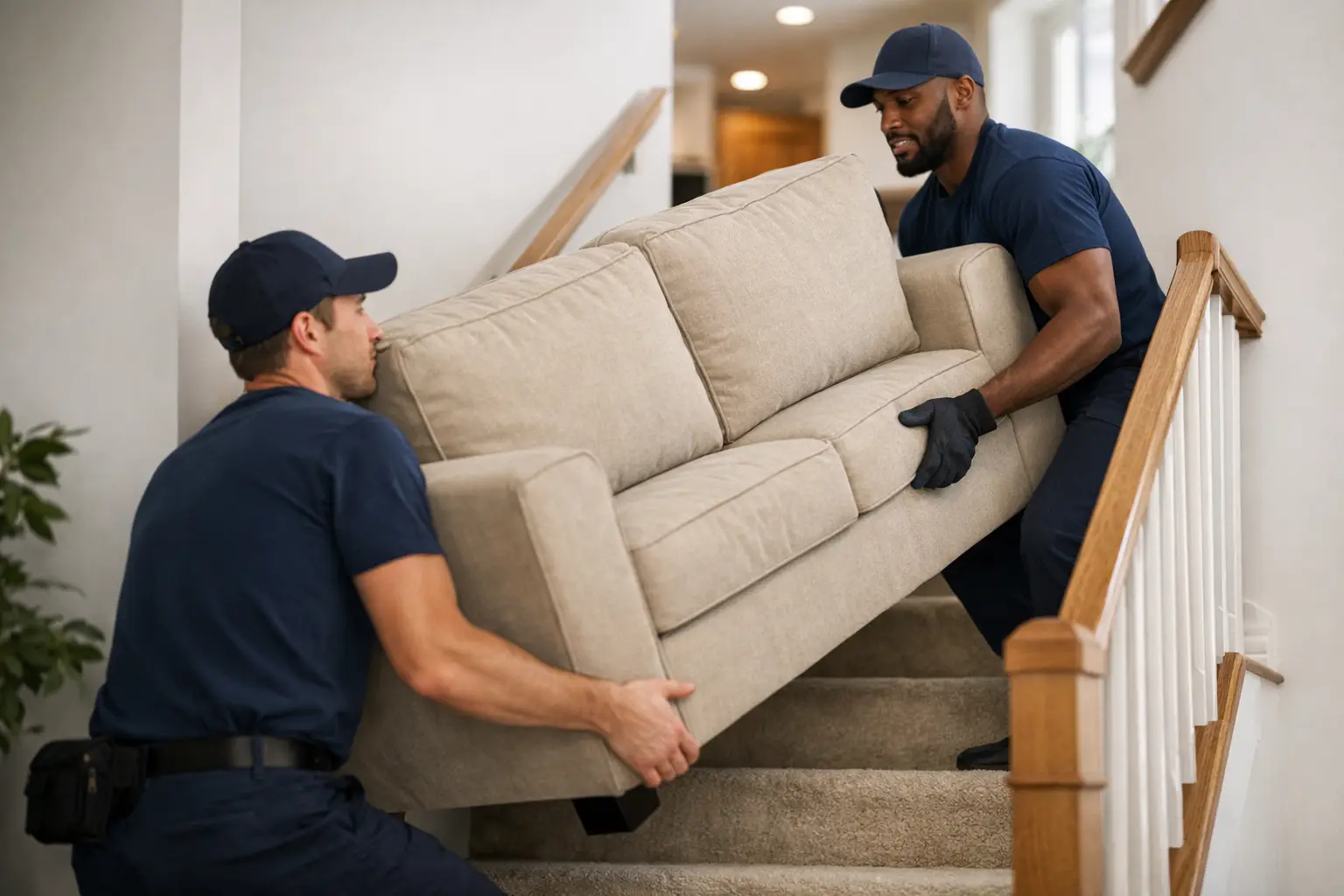
That awkward moment usually comes after the van is unloaded. The sofa fits through the front door, the wardrobe is in pieces, and then you look at the staircase and realise the hardest part is still ahead. If you are wondering how to move heavy furniture upstairs without damaging the item, the walls or your back, the answer is not brute force. It is planning, the right equipment and knowing when a job needs more than one pair of hands.
Moving heavy furniture up stairs is where small mistakes become expensive ones. A rushed lift can crack plaster, gouge bannisters, tear upholstery or leave someone with a serious strain. The safest approach is to slow the job down before you start, not halfway through when the furniture is already wedged on a landing.
Before you move heavy furniture upstairs, measure everything
Most problems on staircases are not really lifting problems. They are access problems. Before any item leaves the ground floor, measure the furniture and measure the route. That means the width and height of the staircase, the depth of landings, the width of door frames, and any tight turns near the top or bottom.
Pay attention to ceiling height above the stairs as well. A tall chest of drawers might fit on the steps but fail when tilted near the upper landing. The same goes for stair rails, light fittings and radiators that steal valuable space.
If the item is modular or can be dismantled, that is almost always the better option. Bed frames, wardrobes, dining tables and some sofas are much safer to move in sections. It takes extra time at the start, but it usually saves time overall and reduces the chance of damage.
The equipment that makes the job safer
If you want to know how to move heavy furniture upstairs properly, equipment matters more than strength. Good movers rely on tools because they improve control.
Furniture blankets help protect corners, fabric, wood finishes and painted walls. Stretch wrap keeps drawers and doors closed so they do not swing open mid-lift. Lifting straps can help distribute weight more evenly between two people, although they need to be used correctly. Work gloves improve grip, especially on polished wood or metal frames. Non-slip footwear is basic but essential.
A sack trolley can help with some items, but not every staircase is suitable for one. On narrow or steep stairs, a trolley can become more awkward than useful. For bulky items, shoulder straps and careful manual handling are often the better choice.
If there is real weight involved, such as a solid oak sideboard, American-style fridge freezer or large sofa bed, the safest equipment may simply be a trained team. Professional movers will usually have protective covers, lifting tools and the experience to judge angles quickly.
How to move heavy furniture upstairs step by step
The first rule is simple. Empty the item if possible. Remove books from shelving units, take drawers out of chests, and detach shelves or glass panels. Every kilo you can remove makes the lift safer.
Next, protect the route. Lay down floor protection where needed, pad bannisters and corners, and clear the staircase completely. Shoes, bags, picture frames and small tables become hazards very quickly when people are carrying weight.
With the furniture wrapped and prepared, decide who is leading the move. On stairs, one person should call instructions clearly. Usually, the person at the lower end is taking more of the load, while the person higher up is guiding and balancing. If both people try to lead, the item tends to twist at the worst moment.
Lift with the knees, keep the item close to the body and move one step at a time. Do not rush to keep momentum. Control matters more than speed. Pause on secure steps if you need to reset grip, but only when both people are stable and the item is balanced.
When dealing with corners or landings, rotate slowly and test the angle before committing. Many large items need to go up vertically, diagonally or on their end for part of the route. That does not mean forcing them. If an item catches, stop immediately and reassess. Forcing a tight fit usually damages the furniture or the property.
How to move heavy furniture upstairs in narrow spaces
London homes often make this harder than expected. Converted houses, Victorian terraces and top-floor flats can have narrow staircases, sharp turns and limited landing space. In these settings, moving upstairs is rarely a straightforward carry.
Sometimes the best method is partial dismantling. A sofa may need feet removed. A wardrobe might need full disassembly. In some cases, doors should be taken off their hinges temporarily to gain a few extra centimetres. That small adjustment can make the difference between a clean move and a scraped frame.
There are also situations where the staircase simply is not the right access point. If an item can be safely brought in through a wider entrance, such as a ground-floor rear door or another access route, that may be worth considering. It depends on the property layout, the item and how exposed the alternative route is.
When not to do it yourself
There is a difference between heavy and awkward. A dining chair is light but easy to handle. A sofa bed might be manageable on paper but dangerous because the weight shifts unexpectedly. The same applies to washing machines, fridge freezers, large wardrobes, marble tops and anything with glass.
You should think twice about doing it yourself if the item weighs enough that you cannot lift one side comfortably, if the staircase is steep or narrow, if the turn is tight, or if you only have one helper. It is also worth stopping if the furniture has sentimental or high replacement value. Saving money on labour does not feel like a good deal once repairs or replacement enter the picture.
A professional removals team will usually assess whether the item should be carried, dismantled or repositioned another way. That judgement is where much of the value sits. It is not only about muscle. It is about reducing risk and avoiding delays on moving day.
Common mistakes people make on stair moves
One of the biggest mistakes is starting without a plan for the turning points. The first few steps can feel easy, then the item jams at the landing and nobody has room to move. Another common issue is using too few people. More helpers are not always better, because extra hands can get in the way, but two trained movers are often far safer than one strong friend and one hesitant one.
People also underestimate the value of protection. Blankets and wrap are not extras. They prevent dents, scuffs and tears during the most awkward part of the move. And then there is fatigue. Heavy lifts often happen after packing, loading and travelling, when everyone is already tired. That is exactly when poor handling decisions happen.
Should you dismantle or carry whole?
It depends on the item. A solid dining table may be quick to dismantle and far easier to carry in pieces. A well-built sofa might be better left intact if disassembly would weaken the frame or take too long. Flat-pack wardrobes, on the other hand, are often risky to move assembled because they can flex and split under stress.
As a general rule, dismantle when it reduces size, protects weak joints or makes the route significantly easier. Carry whole only when the item is structurally stronger intact and the access route is clearly workable. If there is doubt, dismantling is usually the safer call.
Getting help can be cheaper than getting it wrong
Many people put off hiring movers because they assume it will cost more than it is worth. But upstairs moves are where professional help often pays for itself. A team that arrives with the right vehicle, protective materials and enough staff can load, carry and place items far faster than a DIY effort stretched across a full day.
That matters even more if your move includes multiple heavy items, upper-floor access or furniture that needs dismantling and reassembly. A service built around practical support can remove a lot of the pressure. Companies such as The Kings Removals are used to handling these situations with trained teams, furniture protection and insured transport, which gives you far more control over the result.
A quick reality check before moving day
If the furniture is valuable, the stairs are tight and you are already worried about how the lift will go, that instinct is probably right. Most difficult stair moves do not go wrong because people are careless. They go wrong because the job needed better preparation or more capable handling than expected.
The safest move upstairs is the one that protects your home, your furniture and the people carrying it. If that means taking the item apart, do that. If it means bringing in experienced movers, do that instead. A smooth move is not about proving you can carry everything yourself. It is about getting everything upstairs without turning one awkward item into the most expensive part of the day.