
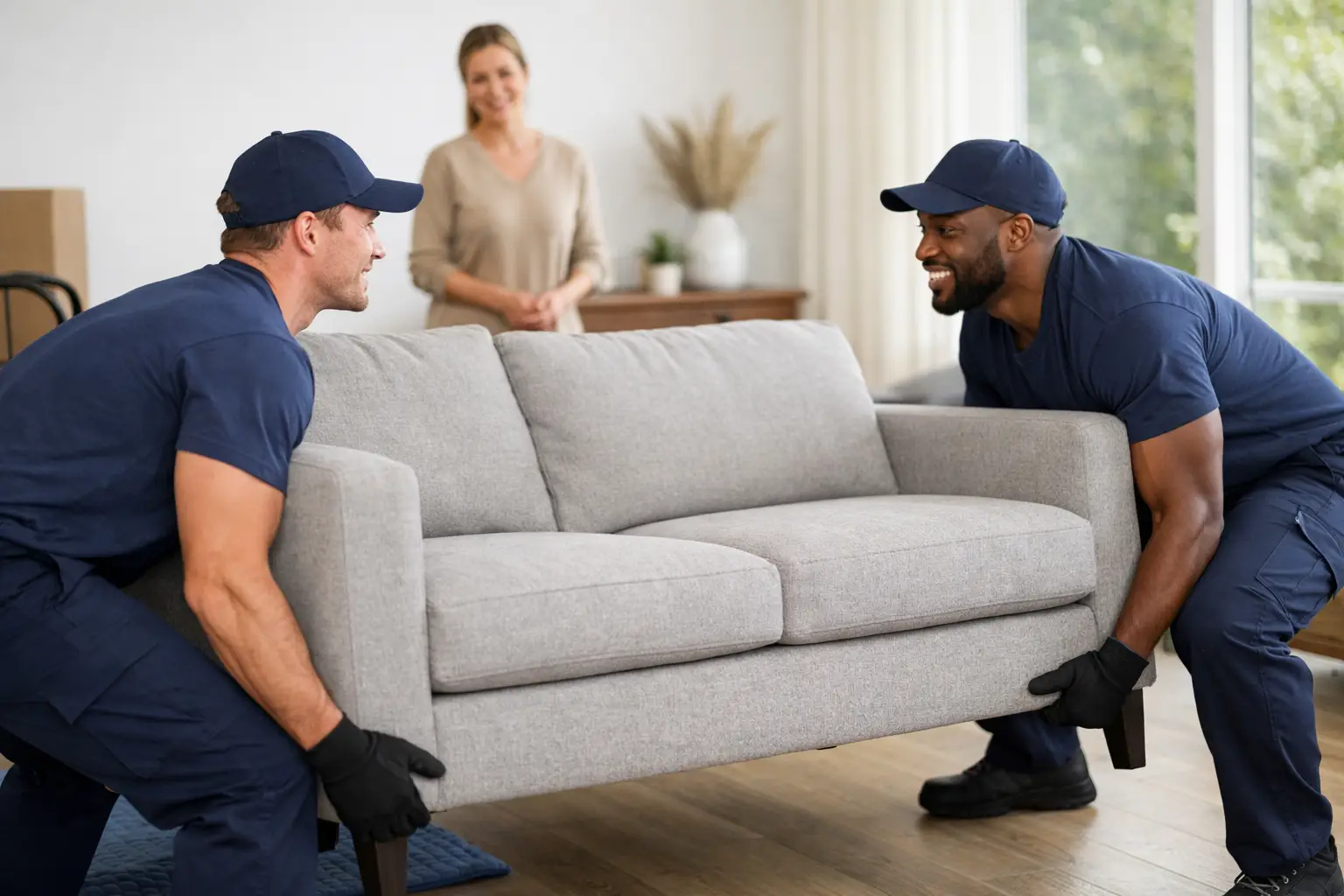
That moment usually comes without much warning. You look at the sofa, look at the doorway, and realise this is either going to be straightforward or a very expensive mistake. If you are working out how to move a sofa safely, the real job is not just lifting something heavy. It is protecting your back, your walls, the sofa itself and anyone helping you.
A sofa can be awkward in ways that catch people out. The weight is rarely balanced, the grip points are poor, and corners, stairs and tight hallways quickly turn a simple carry into a strain or a scrape. A bit of planning makes a bigger difference here than brute force ever will.
How to move a sofa safely before you lift it
Start by checking the route, not the sofa. Measure the sofa’s height, width and depth, then measure doorways, hallways, stairwells and any tight turns. In many London homes, the issue is not the front door itself but the angle needed to get past a bannister, radiator or narrow landing.
If the measurements are close, remove cushions first and check whether the legs can come off. On some models, taking off the feet gives you just enough clearance to avoid forcing the frame. Keep any screws or fittings in a labelled bag and tape it securely to the underside or store it somewhere obvious.
Next, clear the path fully. That means rugs, shoes, side tables, lamps and anything else that can create a trip hazard. Prop doors open where possible. If you are moving through communal areas, make sure there is enough room and that someone is ready to guide rather than simply watch.
It also helps to decide in advance which end is leading. A sofa moved without a plan tends to stop and start every few seconds, and that is when hands get trapped and walls get marked.
The equipment that actually helps
You do not need specialist gear for every move, but a few basic items reduce the risk significantly. Good grip gloves help with control, especially if the upholstery is smooth or dusty. Furniture blankets or thick covers protect corners and fabric. Lifting straps can help, but only if the people using them know how to keep the load balanced.
A trolley can be useful on flat ground, especially for getting a sofa from the property to the van. It is less helpful on stairs and can create a false sense of ease if the sofa is not secured properly. For larger removals, a Luton van with a tail lift makes loading much safer than trying to push a heavy sofa up a ramp or lift it into a high vehicle by hand.
If you are wrapping the sofa, avoid making it too slippery. Protective wrap is useful, but you still need safe handholds. The aim is protection with control, not protection at the expense of grip.
Lifting properly matters more than lifting confidently
Most sofa-moving injuries happen because people rush the first lift. Bend at the knees, keep your back straight and hold the item close to your body. Lift smoothly together on a clear count so both people move at the same time.
Do not twist while carrying. If you need to turn, move your feet. Twisting under load is one of the quickest ways to strain your back, especially when the sofa shifts unexpectedly.
Communication matters as much as strength. One person should call the movements, particularly on stairs or through tight spaces. Simple instructions like stop, lower, tilt left or rest are better than everyone trying to improvise. If one person feels the weight is too much, stop immediately. Pushing through is how damage happens.
There is also a practical limit to what two people should carry. A compact two-seater may be manageable. A bulky corner sofa, sofa bed or hardwood frame can be another matter entirely. Weight is only part of the issue. Shape, size and access often make a lighter sofa harder to move than a heavier one.
How to move a sofa safely through doors and narrow spaces
This is where technique matters. Most sofas go through tight spaces better when tilted, rotated or stood on one end, but not every frame is built to handle that. Before changing the angle, check whether the sofa has delicate legs, a recliner mechanism or a loose internal frame.
The common approach is to move slowly in stages. Bring the sofa close to the doorway, tilt it carefully and feed one corner through first. From there, rotate gradually while the second person supports the trailing end. The mistake people make is trying to force the middle of the sofa through before the angle is right.
If you meet resistance, stop. Resistance usually means one of three things: the angle is wrong, something is catching, or the sofa simply will not fit without more dismantling. Forcing it can tear fabric, crack timber or gouge plaster.
In older properties and converted flats, tight staircases are often the deciding factor. Sometimes the safest option is not to keep trying inside the building but to use a different route. That may mean removing a door temporarily or considering a window access move with proper equipment and trained handlers. That is not a DIY decision.
Stairs are where the risk increases
Stairs change the job completely because the weight shifts fast. The person at the lower end usually takes more of the load, and visibility can be poor. If either person cannot maintain a stable footing, the move should stop.
Take one step at a time and use landings as resting points. Never rush a staircase because you are halfway through and want it over with. Fatigue causes poor decisions, and poor decisions on stairs can lead to injuries or dropped furniture.
If the staircase is narrow, steep or has an awkward turn, be realistic. Some sofa moves are possible but not sensible without professional help. That is especially true for heavier pieces, sofa beds and properties with multiple flights.
Loading the sofa into a vehicle without damaging it
Getting the sofa out of the house is only half the job. Loading it badly can undo all the careful handling up to that point. The sofa should be placed in a position where it cannot slide, tip or be crushed by other items.
Stand it only if the design allows it and it can be secured safely. Some sofas travel better upright, others flat. It depends on the frame, the upholstery and what else is in the vehicle. What matters is stability. Use straps to hold it in place and keep hard-edged items away from visible fabric or leather.
Do not pack boxes on top unless you are certain the sofa can take the weight without distortion. Cushions should travel separately if needed, especially if removing them makes the main piece easier to secure.
If rain is a possibility, protect the sofa before it leaves the property. Fabric can pick up moisture quickly, and a few minutes exposed on the pavement is sometimes enough to create marks or odour issues later.
When moving a sofa yourself stops making sense
There is a difference between saving money and creating avoidable risk. If the sofa is especially valuable, oversized, very heavy or difficult to dismantle, a professional move is often the cheaper option once you factor in the cost of damage, injury or vehicle hire.
This is particularly true if you are dealing with a full house move at the same time. Trying to manage boxes, timing, keys and a bulky sofa in one day adds pressure where mistakes happen. A removals team can handle the carrying, protect the item properly and load it into the right vehicle without turning the whole day into a wrestling match.
For many people, the best approach is mixed. Handle the lighter items yourself and bring in support for the awkward, high-risk pieces. That keeps the move practical without taking unnecessary chances.
Common mistakes people make when moving a sofa
The first is assuming the sofa will fit because it came in once before. It may have arrived with the legs removed, at a different angle or through a different entrance. The second is underestimating the need for enough people. Two capable movers are better than three uncoordinated ones, but one person trying to manage most of the weight is asking for trouble.
Another common mistake is focusing only on the sofa. Walls, floors, door frames and bannisters are often the first things to get damaged. Put protection down where needed and think about the property as well as the furniture.
Finally, people leave the difficult item until the end of the day when everyone is tired. If the sofa is the most awkward part of the move, deal with it early while energy and patience are still there.
If you are unsure, that hesitation is useful. It usually means you have spotted a genuine risk. In those cases, a practical removals team like The Kings Removals can take over the heavy part of the job and keep the move safe, efficient and under control.
A sofa should never be the item that turns a straightforward move into a damaged wall or a pulled back. Take your time, measure properly and be honest about when an extra pair of trained hands is the safer choice.