
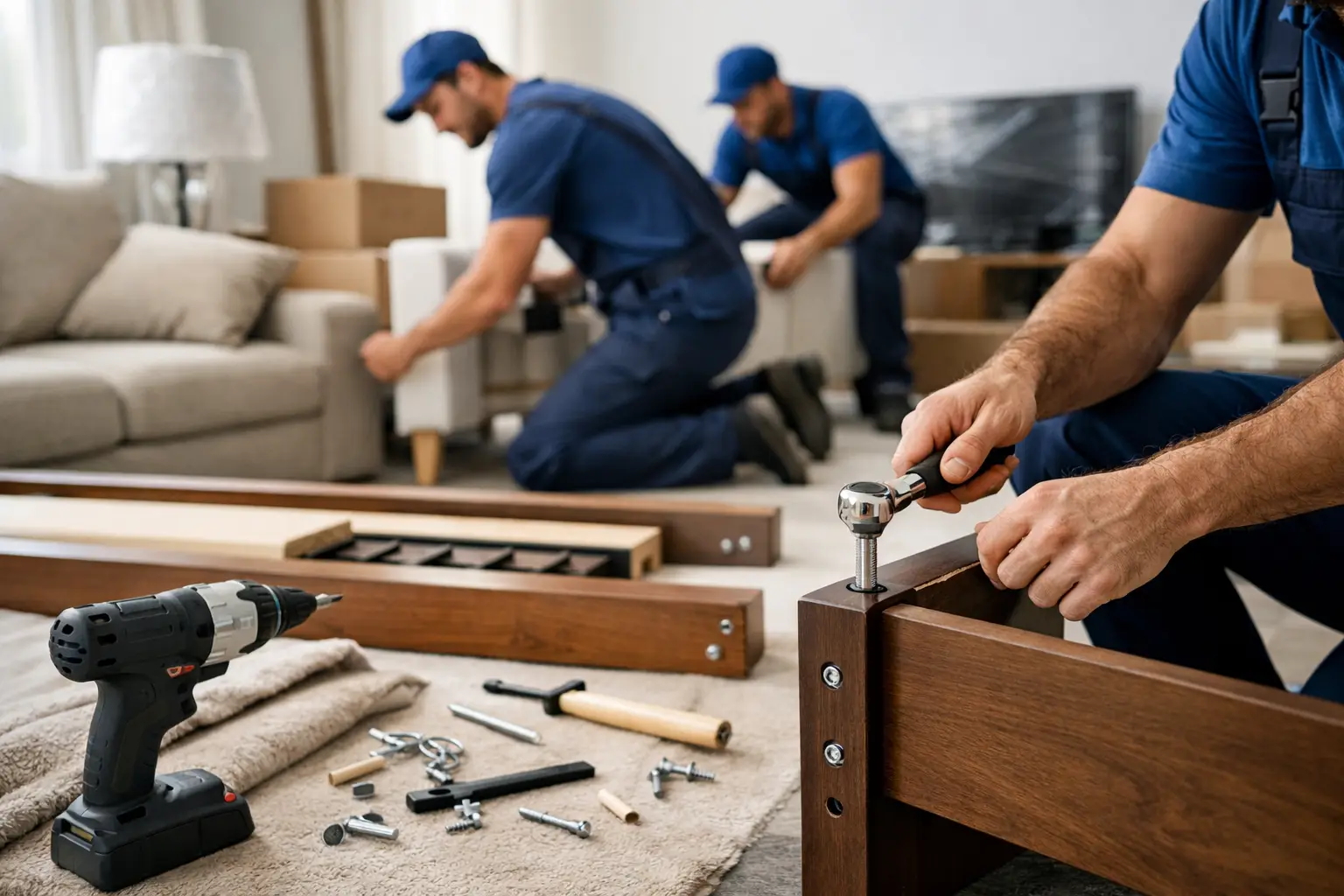
You realise how awkward a move can get when the wardrobe will not clear the bedroom door, the bed frame is bolted tight, and the sofa looks wider than the stairwell. At that point, one question matters fast – do movers dismantle furniture? Often, yes, but not always by default, and the detail matters if you want the move done safely, on time and without surprise charges.
For most house moves, furniture dismantling is a practical part of the job rather than an unusual extra. Beds, dining tables, wardrobes, desks and some shelving units often need to be taken apart so they can be moved through narrow hallways, down stairs or into a van securely. The key point is that every removals company handles this slightly differently. Some include basic dismantling and reassembly in the service, while others treat it as an add-on or only do it for selected items.
Do movers dismantle furniture as standard?
There is no single rule across the removals industry. Many movers will dismantle furniture if it is necessary for transport and access, especially common household items that are designed to come apart and go back together without specialist fitting. That said, standard service does not always mean every item in the home will be disassembled automatically.
In practice, movers usually look at three things. First, does the item need dismantling to get out of the property safely? Second, can it be dismantled without risking damage? Third, has this been agreed in advance? If the answer to all three is yes, it is often straightforward.
This is why clear communication before moving day makes such a difference. If your quote is based on carrying already-prepared items, but the team arrives to find three large wardrobes still standing, the job may take longer than planned and cost more. It can also affect van loading and timing for the rest of the move.
Which furniture is usually dismantled?
The most common items are bed frames, large tables, modular sofas, wardrobes, office desks and some bookcases. These pieces are often too bulky to move in one piece or are more likely to get scratched, twisted or stuck in tight spaces if left assembled.
Flat-pack furniture is a separate case. Some flat-pack units can be dismantled and rebuilt without trouble. Others become weaker each time they are taken apart, particularly if the fittings have already loosened over time. A professional mover may advise leaving certain lower-quality flat-pack items assembled if possible, or may explain that reassembly cannot be guaranteed if the structure is already fragile.
Garden furniture, gym equipment and children’s furniture also depend on the item. A simple outdoor table may be easy to break down. A multi-part treadmill or climbing frame is another matter and may need specialist handling or extra time.
Items that may need special agreement
Some furniture should never be assumed to be part of standard dismantling. Custom-built wardrobes, wall-mounted units, antique furniture, marble-top tables and anything with electrical connections usually need a specific discussion beforehand. The same goes for furniture fixed to walls for safety reasons.
If an item is bespoke, delicate or expensive, a good removals team will want to know in advance how it is constructed, whether there are manufacturer instructions and whether there are any existing weaknesses to be aware of.
What is normally included in dismantling and reassembly?
Usually, the service covers taking apart the furniture enough to move it safely, protecting the individual sections for transport, then putting it back together at the delivery address. Basic tools are commonly carried by experienced movers, so straightforward jobs can often be handled without the customer needing to supply equipment.
What varies is the level of reassembly. Some companies will rebuild the item fully and place it in the correct room. Others may only reassemble essentials such as beds and tables, especially if the move is booked on an hourly basis and time matters. If you want wardrobes, desks and shelving rebuilt as well, it is always better to request that upfront.
This is also where access matters. Reassembly can be delayed if the room is too full of boxes, if flooring needs protecting first, or if parking restrictions have already eaten into the booked time. The smoother the access, the faster the team can complete the job.
When movers may refuse to dismantle furniture
There are situations where a mover may say no, and that is usually a sign of caution rather than poor service. Furniture may be refused for dismantling if it is structurally unsound, if specialist joinery is required, if the fittings are missing, or if there is a high chance the item will not go back together safely.
The same applies when furniture has been glued, altered from its original design, or partly damaged already. A removals team is there to transport items safely, not to carry out restoration or carpentry work. If an item is likely to collapse once disassembled, the sensible approach is to discuss alternatives before the move.
There can also be liability limits. If a customer insists on dismantling a fragile item against advice, some companies may ask for written acknowledgment that the risk sits with the owner.
How to know if your mover will dismantle furniture
The fastest way is to ask direct, practical questions when requesting a quote. Do not just ask whether dismantling is available. Ask which items are included, whether reassembly is part of the same price, how long the team expects it to take, and whether anything needs to be prepared in advance.
Photos help a lot. A quick set of pictures showing the furniture, staircases, doorways and any awkward corners gives the removals team a far more accurate view of the job than a short description ever will. It helps avoid underquoting and reduces the chance of problems on the day.
If you are moving from or to a London flat, mention floor level, lift access and parking restrictions as well. A simple bed dismantle on paper can become more time-sensitive if the team is working around controlled parking or multiple flights of stairs.
Useful details to share before moving day
Tell your mover if you have lost assembly instructions, if any bolts are already missing, or if a piece was difficult to build in the first place. Mention anything unusually heavy, fragile or fixed to the wall. Small details like these save time and help the team arrive properly prepared.
If you want a smoother move, it also helps to empty wardrobes, desks and drawers before dismantling starts. Even sturdy furniture can become awkward or unsafe when moved with contents still inside.
Does furniture dismantling cost extra?
Sometimes yes, sometimes no. It depends on how the quote is structured. On an hourly move, dismantling may simply be part of the labour time, which means the total rises if the work takes longer. On a fixed quote, basic dismantling and reassembly may already be included for listed items.
The important thing is not whether it is called an extra, but whether it has been allowed for properly. A cheaper quote can stop looking cheap very quickly if key items were assumed to be ready to move and then need an extra hour or two of work.
For that reason, the best quotes are the clear ones. If dismantling is needed, it should be written into the plan rather than left as a vague possibility.
Why professional dismantling is often worth it
Trying to do it all yourself the night before a move can save money in some cases, but it can also create avoidable problems. Lost screws, stripped bolts, damaged panels and missing tools are common. So is the classic mistake of dismantling something too early and then realising you still need it for one more night.
A professional team usually works faster because they know which parts need removing and which can stay in place. They are also thinking about the next step at the same time – how the item will be protected, carried, loaded and rebuilt. That joined-up approach tends to reduce both delays and damage.
For customers who want a practical, hands-on service, this is often where good removals support earns its keep. Companies such as The Kings Removals handle dismantling and reassembly as part of making the overall move quicker, safer and easier to manage.
A few checks to make before the team arrives
If furniture is being dismantled, clear enough space around each item for the team to work. Keep pets and children out of the room while larger items are taken apart. Pack loose contents separately and, if you have them, keep any assembly guides somewhere easy to find.
It also helps to decide in advance where each item should go in the new property. Reassembling a bed in the wrong room and then moving it again is a simple way to waste time and energy.
The short answer to do movers dismantle furniture is yes, often they do – but the smart move is never to assume. Agree it in advance, show the items clearly, and make sure the quote reflects the real job. That small bit of planning can save a lot of lifting, stress and last-minute improvising when moving day arrives.