
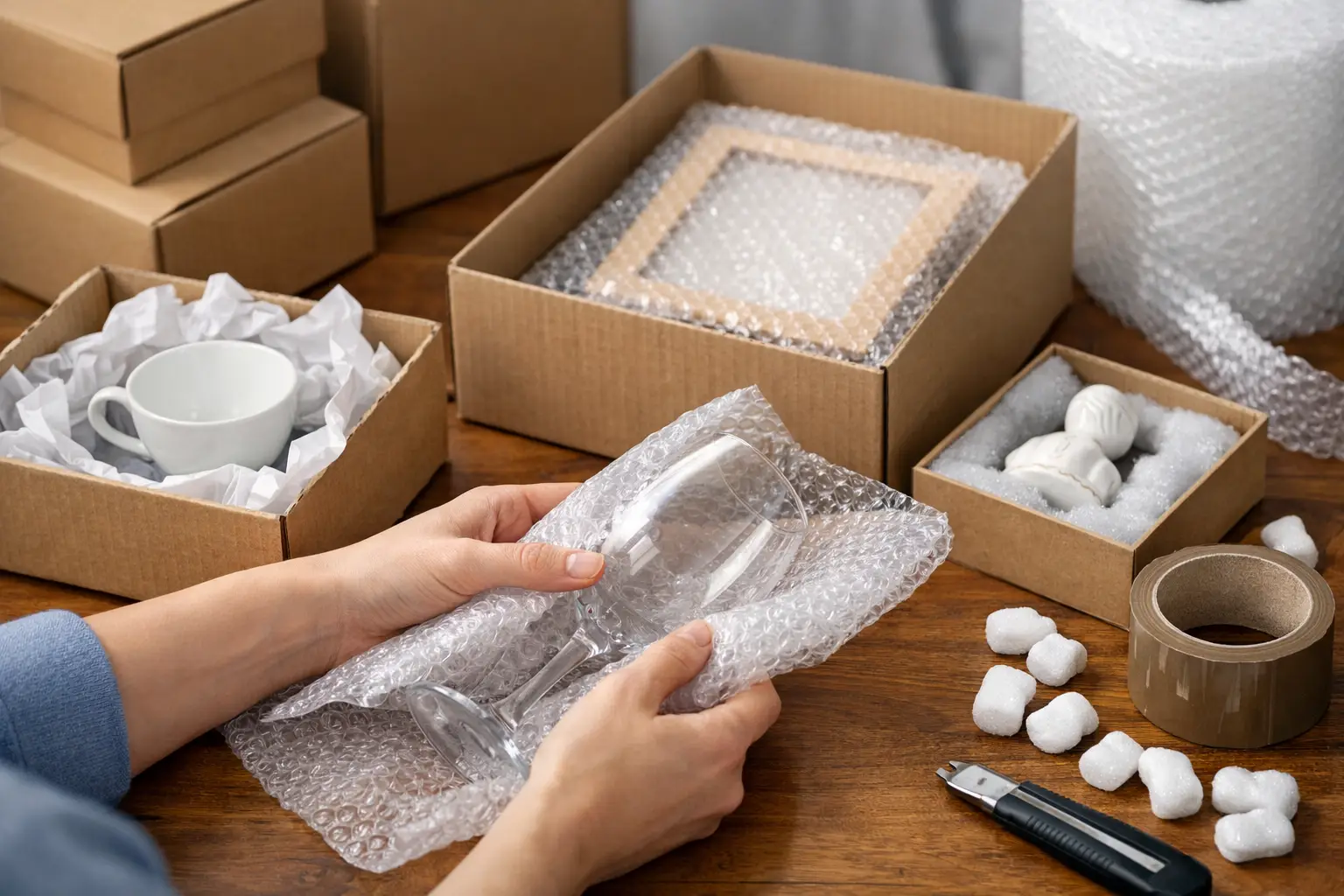
A chipped plate or cracked lamp usually happens before the van even moves. Most breakages come from poor wrapping, empty space inside boxes, or mixing heavy and delicate items together. If you are wondering how to pack fragile items safely, the good news is that a few practical habits make a big difference.
Packing fragile belongings properly is not about using the most expensive materials. It is about choosing the right box, wrapping each item to suit its shape, and stopping movement during lifting and transport. Whether you are moving from a flat in London, putting boxes into storage, or preparing for a longer house move, the aim is the same – protect each item from pressure, knocks and vibration.
What actually causes fragile items to break
People often assume damage happens because a box is dropped. That can happen, but more often the problem starts earlier. A box that is too large allows items to shift. A box that is too weak can bow under weight. Even a well-wrapped glass can crack if it is packed next to something heavier that moves into it.
The other common mistake is rushing. Fragile packing takes a bit more thought because different items need different support. Glassware, crockery, mirrors, ceramics and electronics do not respond well to a one-method-fits-all approach.
The materials that matter most
If you want to know how to pack fragile items safely, start with materials that give structure as well as cushioning. Strong double-walled boxes are usually worth it for breakables because they hold their shape better when stacked. Good packing tape matters too, especially on the base of the box.
Bubble wrap is useful, but it should not be the only layer of protection. Packing paper is often better for the first wrap because it moulds closely around surfaces and helps prevent scratches. Foam sheets can work well for plates and screens. Towels, bedding and clothes can help as filler in some cases, but they are less reliable than proper packing materials because they shift more easily.
It is also worth having marker pens ready. Clear labelling will not stop damage on its own, but it helps everyone handling the boxes understand what needs extra care.
How to pack fragile items safely by box type
The box matters almost as much as the wrapping. Small and medium boxes are usually safer for fragile items than large ones. That is because heavy breakables, such as plates or books mixed with ornaments, become harder to carry and more likely to collapse if packed into oversized cartons.
For glasses, mugs and smaller decorative items, use smaller boxes with enough depth for padding at the bottom and top. For kitchenware, use sturdy medium boxes and avoid overfilling. For mirrors, framed artwork and televisions, standard moving boxes are rarely enough on their own. These items need flat protection, reinforced corners and, ideally, purpose-made cartons.
Whatever box you use, build a padded base first. A layer of scrunched packing paper or bubble wrap at the bottom helps absorb minor shocks during loading and unloading.
Wrapping glasses, crockery and kitchenware
Kitchens are usually where the most fragile items are concentrated, and they are often packed last in a rush. That is when things go wrong.
Glasses should be wrapped individually. Start with packing paper, fold the corners in, roll the glass carefully, and then add bubble wrap if needed. Do not stack wrapped glasses directly inside one another unless they are designed for it and there is proper padding between them. Place them upright in the box, not on their sides, and fill any gaps so they cannot knock together.
Plates and bowls need a different method. Wrap each piece separately, then stack plates vertically like records rather than flat on top of each other. This often reduces pressure fractures. Add cushioning between each item and around the edges of the stack. Bowls can usually be nested with padding between them, but avoid making stacks too tall.
With mugs, pay attention to handles. The body of the mug may survive a journey, while the handle snaps because it was left exposed. Extra wrapping around delicate points is time well spent.
Packing ornaments, ceramics and sentimental items
Fragile decorative items are awkward because their weak points are often uneven. A vase may have a narrow neck, a figurine may have protruding arms, and a lamp may have a delicate base. Wrap these items individually and give extra support to the parts most likely to snap.
Do not force oddly shaped items into boxes that are too small. Pressure from the sides can be as damaging as impact. If the object has a lid, detachable top or separate pieces, pack those parts on their own rather than leaving them attached.
Sentimental value matters here as much as replacement cost. If something would be difficult or impossible to replace, give it more protection than you think it needs. For especially delicate pieces, double boxing can be the safer option. That means placing the wrapped item in a smaller padded box, then placing that box inside a second larger one with cushioning around it.
Mirrors, pictures and screens need a different approach
Flat fragile items are often damaged by flexing rather than direct hits. A mirror can crack if it bends slightly during carrying. A television screen can be ruined by pressure at one corner. That is why these items need firm support, not just soft wrapping.
Use corner protectors if you have them. Wrap the whole item in moving blankets, foam or several layers of protective wrap, then place it in a suitable carton. Keep it upright during transport where possible. Laying screens flat can increase the risk of pressure damage if anything is placed on top.
It also helps to tape a large X shape across glass surfaces before wrapping. This will not prevent breakage, but it can reduce shattering if the glass does crack.
How to stop movement inside the box
One of the simplest answers to how to pack fragile items safely is this: nothing inside the box should be able to move. If you gently shake the box and feel or hear shifting, it is not ready.
Fill empty spaces with packing paper, foam peanuts, bubble wrap or other stable filler. Be careful not to overpack to the point where the box bulges, because pressure from above can then transfer straight into the items inside. You want a snug fit, not a compressed one.
Weight distribution matters too. Put heavier fragile items at the bottom only if they can bear that load safely, and never place something heavy on top of something delicate just to save space. It is usually better to use more boxes than to create one overloaded box that is hard to carry.
Labelling and handling still matter
A well-packed box can still be mishandled if nobody knows what is in it. Mark boxes clearly on more than one side with terms such as Fragile and This Side Up where relevant. It sounds basic, but clear instructions help during a busy moving day when multiple boxes look similar.
Try to pack each fragile category together by room. Kitchen glassware in one set of boxes, ornaments in another, office electronics separately. This makes unloading quicker and reduces the temptation to stack unsuitable items together in the van.
If you are hiring movers, mention high-risk items in advance. A practical removals team can plan loading order, use the right protective materials and avoid common mistakes such as stacking heavy boxes against framed items.
When professional packing is the better option
There is a point where doing it yourself stops being the most sensible choice. If you have a full kitchen of breakables, expensive electronics, artwork, antiques or a tight moving schedule, professional packing can save both time and money. The cost is often easier to justify when compared with replacing damaged items or losing hours to repacking on moving day.
This is especially true for London moves where access can be awkward, parking is limited, and jobs need to be done quickly. A team used to handling fragile goods will usually pack more efficiently because they know how to protect items for stairs, lifts, storage and road travel. At The Kings Removals, that hands-on approach is often what helps customers turn a stressful move into a manageable one.
Common packing mistakes to avoid
The biggest mistake is underestimating how much padding is needed. The second is using the wrong box. After that, most problems come from mixing fragile and heavy items, leaving gaps inside cartons, or relying on newspaper that can leave marks on surfaces.
Another issue is packing boxes too heavy to lift comfortably. If a box is difficult to carry, it is more likely to be dropped or tilted. Fragile boxes should be manageable, stable and easy to stack securely.
If you are short on time, focus on the items with the highest breakage risk first. Glass, ceramics, mirrors and electronics need proper attention. Non-breakables can wait. That small bit of planning usually prevents the costly mistakes.
A careful pack does more than protect objects. It gives you one less problem to worry about when the keys need collecting, the van is booked and the day is already busy enough.